
Every DUI lawyer’s website says the same words. Aggressive. Experienced. Former this, specialist in that. The words are free, so they tell you nothing. What separates the lawyer who is going to work your case from the one who is going to process it is a handful of specific questions, and the answers are checkable.
Ask these of every lawyer you interview. Ask them of me. If a question makes someone uncomfortable, that is information.
First, the thing nobody tells you
There are two business models in DUI defense, and their websites are indistinguishable. One runs on volume. Back up to the courthouse, unload the week’s files, drive off for more. In that model nobody watches your video, nobody pulls the breath instrument’s records by serial number, and nobody files a motion. The fee is low because the effort is low. You are not buying a discount, you are buying an absence.
The other model costs more because someone actually does the work. Neither is a scam. But you should know which one you are buying, and the questions below are how you find out.
The questions
1. Who will actually handle my case, and will I speak to that person?
At a lot of firms the lawyer you meet is not the lawyer who shows up. Ask for a name. Ask whether that person will be at every hearing. Ask how you reach them and how fast they answer. A firm that cannot answer this plainly has told you something about its model.
2. Have you taken a DUI to verdict, and when?
Not “have you handled” DUIs. Tried one, to a jury, to a verdict. Most cases resolve without trial, and that is often the right result, but a prosecutor knows which lawyers will actually pick a jury and which ones never do. That knowledge shapes every offer you receive, before you ever get to decide anything.
3. Will you request the video, and will you watch all of it?
Video either matches the report or it does not. Getting it is the lawyer’s job, through the subpoena in the formal review hearing or through discovery. Ask whether they will request it immediately, because retention windows are shorter than people assume. Then ask whether they watch the whole thing or skim it. Coverage also varies by agency: the Highway Patrol is often dash camera only, and not every officer is issued a body camera, so part of the answer is finding out what exists at all.
4. Will you pull the breath instrument’s records, by serial number?
This is the question that separates people fastest, because a lawyer who does not do it usually does not know what to ask for. The agency inspections, the department inspections, the operator’s permit, the instrument’s own error and interferent logs. These exist for the specific machine that tested you, and they are obtainable. If the answer is vague, you have your answer.
5. What happens with my license, and what is the deadline?
There is a short window after a DUI arrest to challenge the administrative suspension, and it runs separately from the criminal case. Any DUI lawyer should be able to tell you what that window is and what they intend to do about it without checking. You can also work out the deadline yourself in about thirty seconds before you make any calls.
Ask specifically whether the formal review hearing is included in the fee, and what they do with it. That hearing is also the earliest chance to put the officer under oath, which is worth more than many folks realize.
6. What does the fee cover, and what is not included?
The fee is the wrong number to compare on its own. Compare what it buys. Does it include the administrative hearing? Motions? Depositions? An expert if the case needs one? Trial, or is trial a second fee? A quoted number without that breakdown is not comparable to anything.
Ask what a conviction costs too, because that is the number the fee should be measured against. The cost breakdown shows the whole bill, and the fine is the small part of it.
7. Do I have to appear, and at which hearings?
In many misdemeanor cases a lawyer can file a written plea and waive your appearance, so you keep your workday. Some hearings do require you. A lawyer who knows your county will tell you which is which, immediately, and it differs by circuit. In Hillsborough, for instance, criminal divisions require good cause before anyone appears remotely, while several counties to the south run misdemeanor dockets on Zoom.
8. What is the realistic range of outcomes here?
Not a promise. A range, with the reasoning attached. Anyone who guarantees you a result is either guessing or selling, and in Florida it is also an ethics problem. What you want is someone who can tell you what the strong parts and the weak parts of your case are before they have seen the discovery, and then update that honestly once they have.
9. If the evidence does not break my way, what then?
Every honest DUI lawyer will tell you some cases do not get dismissed. The question is what they do about it, and most have no answer beyond negotiating. Ask whether the lawyer builds anything that speaks to who you are rather than only to what the State can prove: your work, your treatment, your record, the context a file does not show. A prosecutor and a judge decide what happens to a person, not to a case number, and almost nobody gives them anything to work with.
This is what I would point to hardest in my practice. I build a mitigation report for clients where it matters, which is a structured account of the whole person rather than a letter asking for leniency. It is what gets handed over when the argument moves from whether the State can prove the case to what should actually happen.
Where a lawyer will not answer these, that is your answer. For what it is worth, here are the ten things I commit to in writing, and the things no lawyer is permitted to promise you.
Red flags
Any guarantee about how your case ends. Nobody can promise a result. The rules prohibit it, and the promise itself tells you what kind of operation you are dealing with.
“I know the prosecutor.” Relationships matter for practical things, like getting someone to actually look at a mitigation packet. They do not decide cases, and a lawyer who leads with this instead of with the evidence is telling you where their effort goes.
Pressure to sign today. There is genuine urgency about the license deadline, and a good lawyer will tell you the date plainly. That is different from pressure to decide in the room.
A fee that is much lower than everyone else. Sometimes it is a newer lawyer building a practice, which can be fine. Sometimes it is the volume model. The questions above tell you which.
Vagueness about who handles the case. The single most common complaint in this field is that the person you hired was never the person you saw again.
Apply this to me too
I would rather you interview three lawyers with this list than hire me without asking any of it. For what it is worth, here are my answers. I handle the case you hire me for, and you have my number. I started as an Assistant Public Defender in the Thirteenth Judicial Circuit in Tampa, where I handled hundreds of cases and tried them to juries. I request the video in every case and I watch all of it. I pull the instrument records by serial number, because I teach the field sobriety curriculum and I wrote the treatise on the science, and that is where these cases actually turn.
If you want to see the reasoning rather than take my word for it, the case evaluator walks you through the same questions I would ask you and tells you what your answers suggest, with no email and nothing sent anywhere.
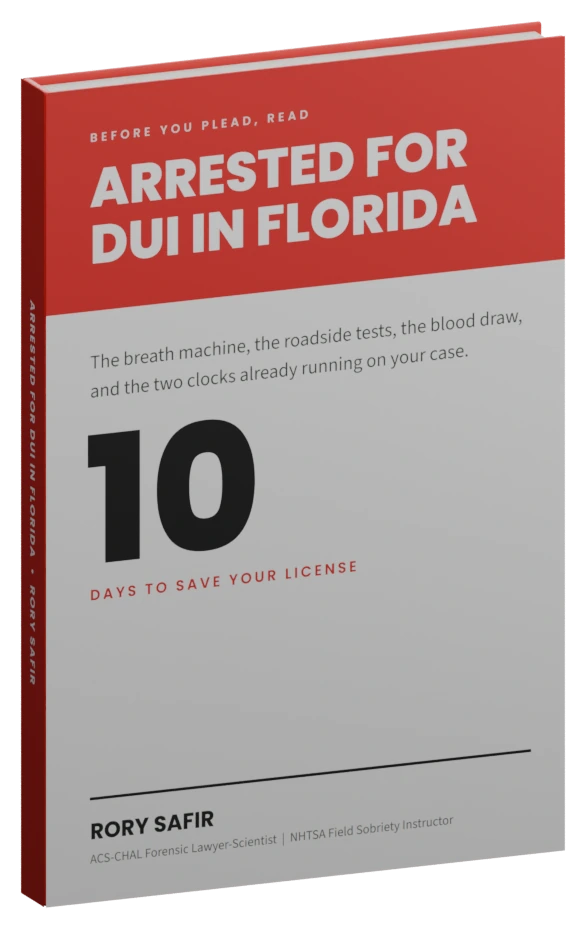
My free guide Hiring the Right DUI Lawyer is the longer version of this, written as a buyer’s guide rather than an advertisement. The case evaluator shows you what is strong and weak in your own case, the deadline checker tells you how long you have, and the cost breakdown shows what a conviction actually carries. If you want the deepest version, my book Arrested for DUI in Florida is free to Tampa Bay residents with a pending charge.
Interview me with this list. If I am not the right fit for your case I will tell you, and I would rather do that than take a case I am not the best person for. Call or text me at (727) 761-4318. Every case is different, and past results do not guarantee a similar outcome.
Common Questions
What questions should I ask a DUI lawyer before hiring one?
Who will actually handle the case and will you speak to them; whether they have taken a DUI to verdict; whether they will request and watch the whole video; whether they will pull the breath instrument records by serial number; what the license deadline is and whether the administrative hearing is included; what the fee covers and what is extra; whether you have to appear; and what the realistic range of outcomes is.
Is a more expensive DUI lawyer better?
Not automatically, and price alone tells you very little. What matters is what the fee buys. A lower fee sometimes reflects a volume practice where nobody watches the video or pulls the maintenance records, and sometimes it reflects a newer lawyer building a practice. The questions above distinguish them.
Should I just use the public defender?
If you qualify financially, the Public Defender’s office has genuinely good lawyers, and I started in one. The real difference is caseload and the time that buys. That is a fair thing to weigh honestly rather than a reason to dismiss the option.
Can a DUI lawyer guarantee my case will be dropped?
No, and you should treat the promise itself as the warning. Florida’s rules prohibit guaranteeing results. What a lawyer can honestly give you is a range with the reasoning attached, updated once they have seen the evidence.
How quickly do I need to hire someone?
The window to challenge your administrative suspension is short and runs separately from the criminal case, so the answer is sooner than many folks think. You can check exactly how many days are left with the deadline checker before you call anyone.
Related reading
Prefer to pick a time rather than call? You can book a free strategy session directly, or call or text (727) 761-4318.