Updated August 25, 2026
An arrest is the start of a fight, not the result of one. What you do in the first hours, whether you stay quiet, whether you let them search, and whether the right lawyer gets to work fast, can change how the whole thing ends.
If you want to know what working with me actually looks like before you call, read what I promise criminal and DUI clients, and the things no lawyer is permitted to promise you.
I am Rory Safir. I started out as a public defender right here in Florida, standing next to people on the worst day of their lives and trying their cases in front of juries. That work taught me what it feels like to face the full weight of the government with everything on the line, and it is still why I do this.
What Really Decides Your Criminal Case
A criminal case can come down to one thing: a stop, a search of a car or a phone, a single lab result, or one witness who is sure of what they think they saw. Each of those has rules behind it. Holding the State to those rules is most of the battle, and it takes work that many lawyers never put in.
On the breath and blood chemistry I am trained in, I read the data myself. I am one of only six attorneys in Florida, and just over a hundred in the country, recognized as a Forensic Lawyer-Scientist by the American Chemical Society. On DNA, digital, cell-site, and medical evidence, I bring in the right experts and cross-examine the State's analysts on their own ground. And as a former Assistant Public Defender in the Thirteenth Circuit, I have tried these cases in front of juries, not just read about them.
Credentials and Affiliations


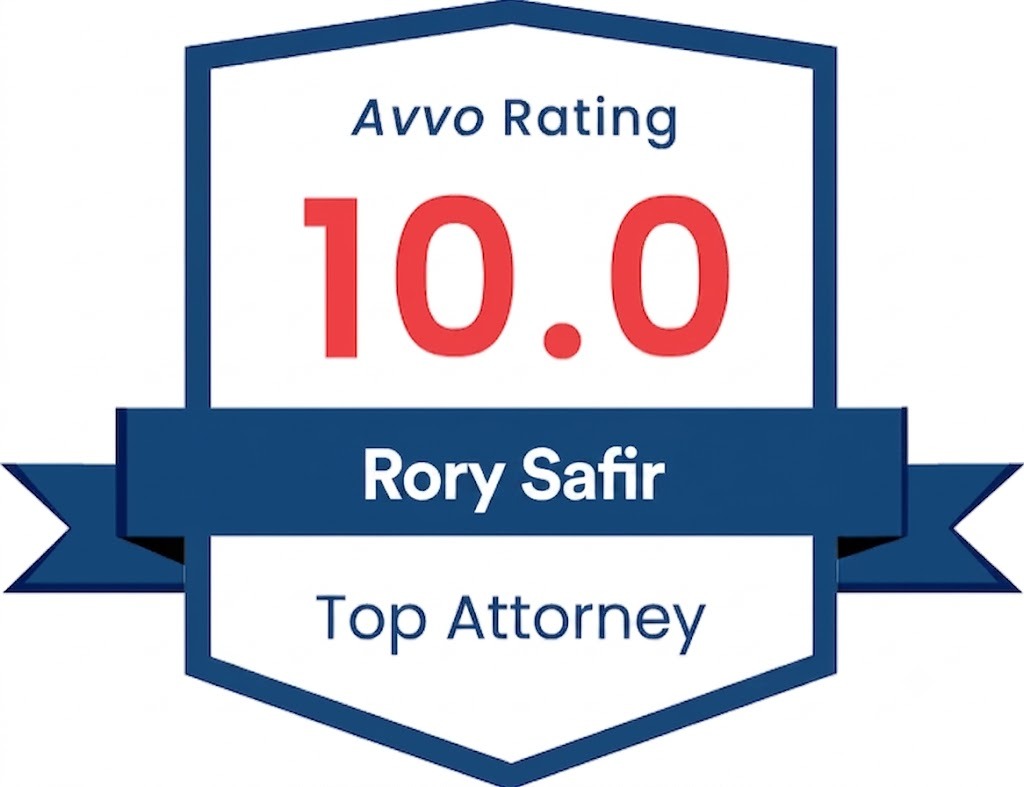









Rory is an ACS-CHAL Forensic Lawyer-Scientist, a Faculty member of the National College for DUI Defense, a Super Lawyers Rising Star, and one of the National Trial Lawyers Top 40 Under 40 for Criminal Defense. He is a member of the National Association of Criminal Defense Lawyers, the Florida Association of Criminal Defense Lawyers, and the Pinellas Association of Criminal Defense Lawyers, and his practice is Lead Counsel Verified.
“Very impressed with Rory’s dedication to criminal defense, especially his commitment to understanding DUI cases. As a fellow attorney, he wins my DUI referrals.”
Chris Hunt, Attorney at Law. Other Florida attorneys send Rory their toughest cases. Read what they say.
What Happens After an Arrest in Florida
Arrested in St. Petersburg? The St. Petersburg DUI and criminal defense page carries the local detail: where the case is actually heard, the ten day license clock, and how diversion works in Pinellas County.
After an arrest you are booked and held for a first appearance, which Florida law requires within 24 hours under Florida Rule of Criminal Procedure 3.130. A judge looks at whether there was probable cause and sets the terms of your release. From there a prosecutor decides what to formally charge, and the case moves into arraignment, discovery, depositions, and motions. If a case ends in a conviction, the work can continue into sentencing, post-trial relief, and later clearing your record.
Two things matter most in those first hours: that you say as little as possible without a lawyer, and that someone starts protecting your side of the story right away. We can be on the phone with you before the first appearance and standing next to you at the courthouse for it.
Every stage is a place to fight. The earliest moves, before charges are filed and on motions to suppress, are often where a case is won or lost.
Where Criminal Cases Are Won
A case is not won in one moment at trial. It is won, or lost, across four stages. Many lawyers work one or two of them. We work all four, starting the day you call.
Before Charges Are Filed
We reach the prosecutor early and make the case for a no-file or a lesser charge before the system locks in.
Motions and Investigation
We move to suppress illegal stops and searches, and we expose the errors hiding in the forensic evidence.
Negotiation and Mitigation
We tell your whole story to reduce or drop charges and to keep mandatory minimums and a conviction off the table.
Trial
When the State will not do the right thing, we are ready to hold it to its burden in front of a jury.
Free guide No. 10
Charged With a Crime in Florida
The first-night orientation for anyone facing a Florida criminal charge: the first 24 hours, bond, court dates, what a defense lawyer challenges, and the two rules that protect you tonight. One request unlocks the whole Safir Guides library.
Getting Ahead of the Charge: Prefile Advocacy
Sometimes the best time to fight a case is before it is ever filed. After an arrest, the report goes to the State Attorney, and a prosecutor decides what to formally charge, or whether to charge at all. That window is an opening. We can get in early, hand the prosecutor the facts and the law they did not have in front of them, and make the case for a no-file or a reduced charge before the system locks in.
This is real work that gets real results. In one matter we engaged the State early, walked them through the evidence, and the prosecutor declined to file at all. The case ended before it ever reached a courtroom. The earlier we are involved, the more often that door is still open.
Telling Your Whole Story: Mitigation Packets
When the facts are hard, the answer is not to pretend they are not. It is to make sure the prosecutor and the judge see the whole human being, not just a police report. We build detailed mitigation packets that lay out your background, your treatment and recovery, your work, your family, the letters from people who know you, and the context a charging document leaves out.
Done right, a mitigation packet changes outcomes. It has turned mandatory felony exposure into a resolution with no felony conviction, and turned a jail recommendation into treatment instead of a cell. It is some of the most important work we do, and it works best when it starts early.
Bond and Getting Out of Jail
Whether you are released, and on what terms, is decided at first appearance. Florida judges weigh the factors in Florida Statute 903.046, including the nature of the charge, the weight of the evidence, your ties to the community, and any history of failing to appear. Counties publish standard bond schedules, but those numbers are a starting point, not a fixed price.
When a bond is set too high, we can ask the court to lower it or to release you on your own recognizance. For the most serious felonies the State may seek pretrial detention with no bond at all, and those hearings are worth fighting hard. Having a lawyer standing next to you at first appearance often makes the difference between sitting in jail and going home.
Arrest Warrants
If you find out there is a warrant for your arrest, the worst thing you can do is wait. We can confirm the warrant, find out what it is for, and in many cases arrange for you to surrender on your own terms, often with a bond already in place so you are not held any longer than you have to be. Nothing here is a promise about a specific case, but handling a warrant early, with a lawyer, almost always beats getting picked up at work or in front of your family.
When the Science Is the Whole Case
In a lot of serious cases, the thing that scares people most is the forensic evidence: a DNA hit, a fingerprint, cell-phone location data, a toxicology report, a blood result. Prosecutors put it in front of a jury like it settles everything. It does not. Labs make mistakes. Analysts misread data. And experts often say more than the science behind them can support.
To take that evidence apart, your lawyer has to understand it. On the breath and blood chemistry I am trained in, I read the raw data myself, the way the State's own analyst does. On DNA, digital, cell-site, and medical evidence, I bring in the right expert and cross-examine the State's analyst on chain of custody, on method, and on the assumptions hiding inside the conclusion. That is the difference between accepting a report and breaking it open.
Across these cases we work with forensic pathologists, toxicologists, DNA analysts, digital-forensics examiners, and accident reconstructionists, and we put the State's experts under oath on their own ground.
See how we challenge forensic evidence, type by type.
Cases We Defend
Recent Criminal Defense Results
Felony Fleeing Dropped After Evidence Failures
Dash and body-camera footage from a high-speed pursuit was never properly preserved. The defense raised the failures, and the felony charge was dropped.
Grand Theft Dismissed After Mistaken Identity
The client shared an unusual name with the real suspect. The defense proved a complete alibi and identified the actual perpetrator, and the case was dropped.
Burglary Reduced and Dismissed Through Diversion
A second-degree burglary charge was reduced to a third-degree felony, then dismissed through a diversion program.
Criminal Mischief Case Dropped on the Eve of Trial
The client refused a conviction on principle. Trial preparation was completed, and the State dismissed the case on the eve of trial.
Criminal Defense Questions We Hear Most
What should I do right after an arrest in Florida?
Stay calm, stay quiet, and ask for a lawyer. You have the right to remain silent and the right to counsel, and using them is not an admission of anything. Do not consent to searches of your car, phone, or home, and do not try to explain your way out. Call us as soon as you can, even before the first appearance, so we can start protecting your side of the record.
How does bond work in Florida?
Bond is set at your first appearance, which Florida law requires within 24 hours of arrest under Rule 3.130. The judge weighs the factors in Florida Statute 903.046, including the charge, the weight of the evidence, and your ties to the community. Counties publish standard bond schedules, but those are a starting point. When a bond is too high, we can ask the court to lower it or to release you on your own recognizance.
There is a warrant out for my arrest. What do I do?
Do not ignore it. We can confirm the warrant, find out what it is for, and in many cases arrange for you to surrender on your own terms, often with a bond already arranged so you are held as briefly as possible. Handling a warrant early, with a lawyer, gives you far more control than waiting to be picked up at work or at home.
Can a criminal charge be dropped or reduced?
Yes, it can. Charges are dropped or reduced when the evidence does not hold up. Common paths include suppressing an unlawful stop or search, exposing weak or unreliable evidence, qualifying for a diversion or treatment court program such as pretrial intervention under Florida Statute 948.08, and negotiating with the prosecutor from a position of strength. Which path fits depends on the facts of your case.
Will this stay on my record? Can it be sealed or expunged?
It depends. To seal or expunge a record in Florida you generally need a withhold of adjudication, which means you were not formally convicted, and you can have only one sealing or expunction in your lifetime. Some offenses are disqualified by statute and can never be sealed even with a withhold, under Florida Statute 943.0584. We look at this early, because protecting your eligibility can shape the whole defense.
Do I have to talk to the detective who called me?
No. If a detective calls and asks you to come in or to explain your side, you are not required to talk, and talking without a lawyer is almost always a mistake. Politely decline, say you want to speak with your attorney first, and call us. We can deal with the detective for you.
What is the difference between a misdemeanor and a felony?
Misdemeanors are the less serious offenses, carry up to a year in county jail, and are handled in county court. Felonies are more serious, are prosecuted in circuit court, and carry more than a year of potential prison time, with the range depending on the degree of the felony. The line between them affects everything from bond to the long-term consequences.
How much does a criminal defense lawyer cost?
It depends on the level of the charge, how complex the case is, and whether it is likely to go to trial. Many criminal matters are handled on a flat fee, payment plans are available, and the first strategy session is free, so you can get clear answers before deciding anything.
Some clients come to me with stakes an ordinary case does not carry. I am proud to represent veterans and servicemembers and the LGBTQ community across my practice, with the respect and discretion every client deserves.
In the News
Terrion Arnold and being held without bond · Terrion Arnold and principal liability · What a subpoena to Google actually gets
Your Whole Story, Not Just Your Case
A prosecutor reads a police report, which holds the worst hour of your life and nothing else. Every client here completes a detailed biographical questionnaire, and those answers become the mitigation report I build in every case: family, work, health, service, and context, delivered to the prosecutor early and to the court when sentencing is on the table. It is part of every case, at no additional fee.
From the blog: criminal court speaks its own language, here are three translations, the first night after an arrest, and what I tell every worried family.
This page is general information, not legal advice, and it does not create an attorney-client relationship. Procedures are summarized from Florida law, including Florida Rule of Criminal Procedure 3.130 and Florida Statutes 903.046, 948.08, and 943.0584. Laws change and every case turns on its own facts. Past results do not guarantee a similar outcome.
Prefer to pick a time rather than call? You can book a free consultation directly, or call or text (727) 761-4318.