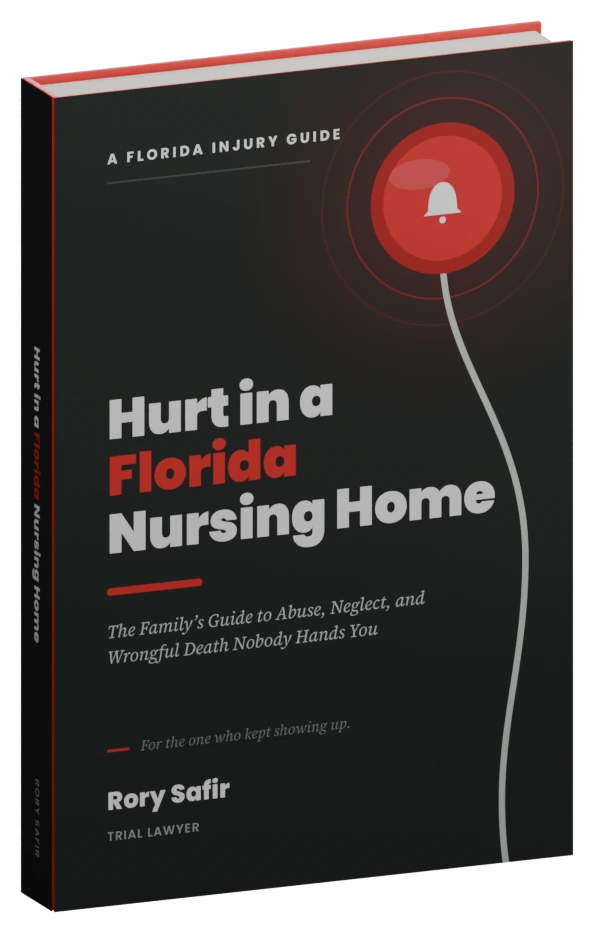
When something is wrong in a Florida nursing home, the person you love usually cannot tell you, and the chart is written by the same people whose care is in question. Your own eyes, visits, and dated notes become the only independent record. This book is the manual for being that record: the warning signs, the reporting calls, the records race, and how these cases really work, in plain English.
Get the book
- Worried about a loved one in a Florida nursing home or assisted living facility? I will send you a copy free. Use the form below, put your mailing address in the message, and a copy goes out to you. No strings, no obligation.
- Want it faster? Get it on Amazon: the paperback is $17.95, and the Kindle edition ($7.99, with every diagram embedded) is there too.
What is inside
- The warning signs that mean tonight and the ones that mean this week, and the visit habits that surface the truth
- The records race: what to request by name before the chart’s story settles, and the preservation letter that freezes what families can never get on their own
- The staffing spreadsheet at the root of almost everything, with Florida’s staffing floor in plain numbers
- Bedsores, falls, dehydration, medication errors, sepsis, wandering, abuse, and financial exploitation, and what each one really means in a case
- The arbitration trap in the admission papers, and why signed is not always the end of it
- The corporate shell game, the facility’s playbook, and the two-year clock that is shorter than it sounds
Twenty-three chapters in six parts, 17 full-page diagrams, a plain-language glossary, a warning-signs checklist, a records request list, a choosing-a-facility guide, a dated visit-log workbook, and a list of questions to ask any nursing home lawyer.
Vet the author the way you would vet a lawyer: I represent families across Tampa Bay, I worked on the defense side of these cases before I chose to stand with families, and I started my career as an Assistant Public Defender in Tampa’s Thirteenth Judicial Circuit.
Request your free copy
Tell me where to send it. You get the digital edition to read the moment you submit, and the paperback follows in the mail, free for Florida families, no strings.
Questions people ask
Is every bad outcome in a nursing home a case?
No, and the book says so plainly. Frail people fall in good facilities, and skin can fail at the end of life despite real care. What separates the tragedy nobody caused from a case is the pattern: the staffing on the floor, the facility’s own records, and a story that does not add up. The book shows you how that pattern gets proven.
What should I do if I think something is wrong right now?
If your loved one is in immediate danger, call 911, and use the emergency room, which treats first and documents independently. Then report it: Florida has a statewide abuse hotline for vulnerable adults, and the ombudsman program advocates for residents. Start a dated notebook the same day. The book’s first chapters walk through each step, and the appendix carries the numbers.
Does the book cover assisted living facilities too?
Yes. Nursing homes and assisted living facilities run on different rulebooks, with different staffing rules and different rights lists, and the book has a chapter on exactly that difference, because families usually learn it too late.
Is the book really free?
For Florida families, yes. Request it with the form above and the digital edition arrives the moment you submit, with the paperback following in the mail. No strings, no obligation.
Will the book tell me whether my family has a case?
It will help you understand the questions a lawyer would ask, but no book can answer that for your specific facts, and I make no promises about any outcome, because every case is different. What it will do is make sure no deadline and no missing record decides the answer for you.
This book is general information, not legal advice, and reading it does not create an attorney-client relationship. If you believe a loved one is in danger right now, do not wait for a book: call 911, and report it to the state’s abuse hotline.