No injury changes an ordinary fall into a life-changing event the way a hip fracture does. It is the injury behind most of the serious premises cases I handle, it is disturbingly easy for a busy emergency room to miss, and it is the injury insurance adjusters work hardest to blame on age instead of the fall. This page explains the medicine in plain English and what a strong hip fracture claim requires.
What actually breaks, and why the location matters so much
The hip is where the thigh bone, the femur, meets the pelvis, and fractures cluster at the femur’s upper end. The location controls everything that follows. A fracture of the femoral neck, inside the joint capsule, threatens the blood supply to the femoral head, which is anatomically fragile: the vessels that feed the head run along the very bone that broke. When that supply is disrupted, the bone of the femoral head can die, a complication called avascular necrosis, and a fracture that looked fixable becomes a hip replacement. Fractures lower down, through the intertrochanteric region, spare the blood supply but demand major hardware, a rod or a plate and screws, and a long recovery either way.
The famous miss: hip pain that shows up in the knee
Here is a medical fact that decides real cases: a fractured hip often announces itself as knee or thigh pain, because the nerves that serve the hip refer pain down the leg. Add an impacted fracture that still bears weight, and you get the classic scenario, an older person falls, complains about the knee, gets a knee X-ray, and goes home with a broken hip. Days of agony later, imaging of the right joint finds it. If that happened to you or a parent, two things are true: the delay matters medically, and it is powerful evidence of how badly the fall actually hurt you.
Why the stakes are higher than a broken bone
A hip fracture in an older adult is a whole-body event. Surgery within a day or two is the standard because immobility kills: clots, pneumonia, and pressure sores stalk anyone kept in bed. Even with good care, many people never recover their prior independence, and the medical literature ties hip fractures in the elderly to a substantial increase in mortality in the following year. Juries are entitled to understand those stakes, and a claim valued like a simple broken bone is a claim that was never properly explained.
How insurers attack a hip fracture claim
The playbook is predictable. The adjuster calls it an old person’s injury: the bones were thin, the fracture was waiting to happen, the fall was incidental. Florida law has a direct answer, the eggshell plaintiff rule: a wrongdoer takes the injured person as found, and fragility gives the wrongdoer no defense, and it is the reason the duty of care existed. Osteoporosis did not break the hip. The fall broke the hip, and the property or driver that caused the fall answers for what it actually did to this person.
Building the proof
The medical file carries the case: the imaging that classifies the fracture, the operative report that shows what the surgeon found, the hardware or replacement implanted, and the therapy records that document the long road after. The incident evidence matters just as much, because hip fractures come from real mechanisms, a slip, a trip, a fall from a bed or a curb, a crash, and connecting the mechanism to the injury is what the defense tries hardest to cut. I build these cases on documents, the way the science deserves: records first, experts who can teach a jury the anatomy, and a timeline that starts the day of the fall. Learn more about my background.
The book
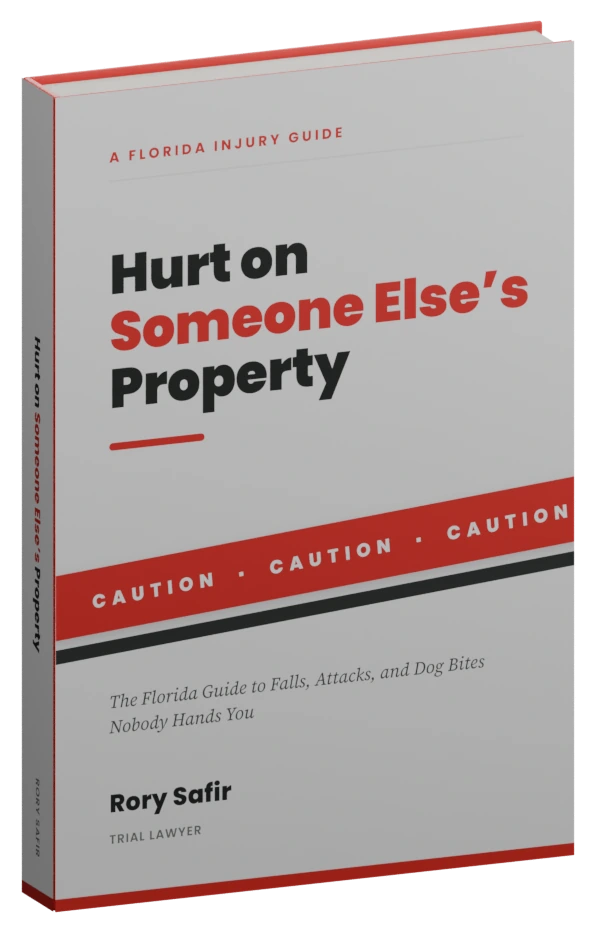
Hurt on Someone Else’s Property
My plain-English book on Florida premises cases covers the falls that cause these injuries, the evidence race, and the medical documentation that decides claims. Free to Tampa Bay residents, with the digital edition to read the moment you ask.
Common Questions
The emergency room X-rayed the knee and missed the hip fracture. Does that hurt my case?
No, and it often strengthens it. Referred knee pain from a hip fracture is a recognized pattern, the delayed diagnosis documents your pain, and depending on the facts the missed finding can raise its own questions about the care you received.
The adjuster says osteoporosis caused the fracture, not the fall. Is that right?
No. Florida follows the eggshell plaintiff rule: the wrongdoer takes you as they find you. Thin bones may explain why the fall broke the hip, but the fall is still the cause, and fragility is not a legal defense.
What is avascular necrosis and why does it matter to a claim?
The femoral head’s blood supply runs along the femoral neck, so a fracture there can starve the bone and cause it to die, turning a repair into a hip replacement. It is a serious recognized complication, and a claim should account for that risk, not just the original fracture.
My parent broke a hip in a fall at a business. Is that a case?
It may be. The question is whether the business failed to use reasonable care, a wet floor, bad lighting, an unmarked step, and whether that failure caused the fall. The injury’s severity is then front and center, because a hip fracture is among the most serious outcomes a fall can produce.
How long do these claims take?
Longer than a simple injury, because the honest value of a hip fracture is not knowable until the surgical outcome and the recovery plateau are clear. Settling before that point almost always means settling for less than the injury.
Related: Serious injuries overview, Traumatic brain injury, Slip and fall claims, Nursing home falls, and About Rory Safir.
This page is general information about Florida law, not legal advice, and it does not create an attorney-client relationship. Florida’s serious injury threshold for pursuing the at-fault driver appears in section 627.737 of the Florida Statutes, and the no-fault and Personal Injury Protection rules in section 627.736. Every case is different, and past results do not guarantee a similar outcome. The hiring of a lawyer is an important decision that should not be based solely on advertisements.