In a personal injury case, the injury is the case. What happened in the crash matters, but what the crash did to your body is what decides whether you recover enough to put your life back together. That is exactly why insurers fight hardest over the most serious injuries, the ones to the brain, the neck, and the spine, because they are worth the most and, too often, the hardest to see on a scan.
Why the injury is the heart of the case
The value of a case rises and falls with the injury and its permanence. A bruise heals and is forgotten; a brain injury, a herniated disc, or a chronic neck injury can follow someone for the rest of their life, costing them work, sleep, and the things they used to enjoy. Proving the full extent of the harm, and that it came from the crash and will not simply go away, is the difference between a token offer and a result that truly covers what was lost.
I built my reputation taking apart the other side’s experts and the science they rely on, first in forensic cases and now in serious injury work. These cases are won and lost on the medical evidence and on whether someone can hold a defense expert to account, and that is the work I know. Learn more about my background.
Florida’s no-fault system and a serious injury
Florida is a no-fault state. After a crash, your own Personal Injury Protection coverage pays a share of your medical bills and lost wages up to its limit, regardless of who was at fault, which is why seeing a doctor within fourteen days of the crash matters. But that coverage is small, and it never comes close to covering a real brain or spine injury. A serious injury lets you step outside the no-fault system and pursue the at-fault driver for full damages, including pain and suffering, once your injury meets Florida’s threshold.
| Category | What it means |
|---|---|
| Permanent injury | A permanent injury within a reasonable degree of medical probability |
| Loss of function | A significant and permanent loss of an important bodily function |
| Scarring | Significant and permanent scarring or disfigurement |
| Death | The loss of a loved one in the crash |
Brain, neck, and spine injuries frequently clear this bar, which is precisely why insurers work so hard to argue that they should not.
The serious injuries we handle
These are the injuries that drive the most serious crash and fall cases. Each one has its own page explaining how it works and how it is proven.
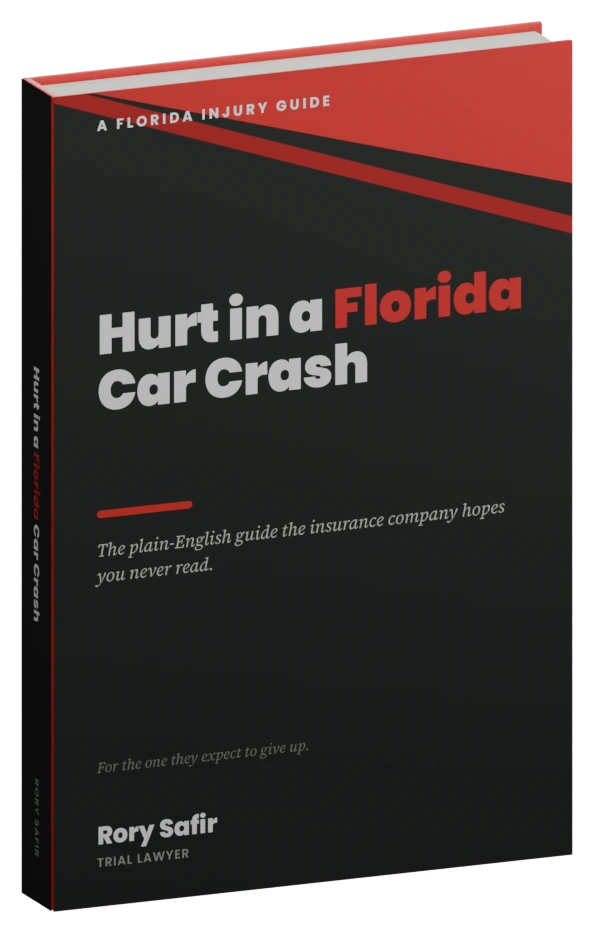
The book
Hurt in a Florida Car Crash
The insurance company’s playbook, the 14-day PIP rule, the serious injury threshold, and Florida’s two-year deadline, in one plain-English book on the hours, days, and weeks after a crash. Free to Tampa Bay crash victims, with the digital edition to read the moment you ask.
How insurers attack a serious injury
The defense playbook is predictable, and knowing it is half the battle. Insurers argue that the imaging was normal so there is no injury, that symptoms which started days later cannot be real, that the problem is just age-related degeneration rather than the crash, that a low-speed impact could not have hurt anyone, and that the injured person is exaggerating for money. Every one of these has a medical and legal answer, built from the records, the imaging, the treating doctors, and the right experts. Anticipating these attacks and answering them before they land is how a serious injury case is won.
What a serious injury claim can recover
When an injury meets Florida’s threshold and the case steps outside no-fault, the damages on the table go well beyond a stack of medical bills. They fall into two groups. Economic damages cover the measurable financial losses: past and future medical care, lost wages, lost earning capacity when the injury changes what you can do for a living, and out-of-pocket costs. Non-economic damages cover the human losses that do not come with a receipt: physical pain, mental anguish, the loss of the ability to enjoy life, and the strain on family and relationships. In the most serious cases, future medical care and lost earning capacity are the largest figures of all, and they are also the ones insurers most want to ignore.
| Type of damages | Examples |
|---|---|
| Medical care | Past treatment, future surgery, therapy, medication, and long-term care |
| Lost income | Wages already lost and reduced earning capacity going forward |
| Pain and suffering | Physical pain, mental anguish, and loss of enjoyment of life |
| Other losses | Out-of-pocket costs and the effect on family relationships |
Putting a fair number on the future, the surgery that has not happened yet, the years of pain, the career that will never be the same, is where experienced help matters most, because that is what the insurer is most determined to undervalue.
What to do after a serious injury
The early decisions shape the whole case. See a doctor right away, within fourteen days of the crash at the latest, both to protect your health and to keep your Personal Injury Protection benefits, and then follow through on the treatment your doctors recommend rather than toughing it out, because gaps in care are the first thing an insurer points to. Keep your own record of how the injury affects your days. Be careful with the at-fault driver’s insurer, since adjusters are trained to find the small admission or the moment of shared fault that pushes you toward the line where your recovery shrinks or disappears. And talk to a lawyer early, while the evidence is fresh and the medical timeline is still being written.
Finding every layer of coverage
A serious injury can cost far more than any single insurance policy will pay, so part of the work is finding every source of recovery. The at-fault driver’s bodily injury coverage is the obvious one, but Florida does not require drivers to carry it, so many at-fault drivers have little or none. That is why your own uninsured and underinsured motorist coverage is so important; it steps in when the other driver cannot pay, and in a serious case it is frequently the difference between a real recovery and an empty judgment. There may also be other policies in play, from a commercial vehicle, an employer, or a household member’s coverage. Identifying and stacking these layers early is often where the real value of a case is found.
Why these cases turn on the experts
A serious injury case is, in the end, a contest between medical experts. Your treating doctors and retained specialists explain the injury, its cause, and its future, while the insurer’s hired examiner is brought in to say the injury is smaller, older, or less connected to the crash than it really is. The case is won by holding that examiner to the evidence under cross-examination, which is the discipline I built my career on. Knowing the science, and knowing how to take apart an expert who is shading it, is what separates a serious result from a quick settlement that leaves money on the table.
Common Questions
What makes an injury serious enough to sue for in Florida?
Florida's no-fault system normally keeps a crash claim inside your own insurance, but a serious injury lets you step outside that and pursue the at-fault driver for full damages, including pain and suffering. The law draws that line at a permanent injury, a significant and permanent loss of an important bodily function, significant and permanent scarring or disfigurement, or death. Brain, neck, and spine injuries frequently meet it.
Does my own insurance really pay first, even if the crash was not my fault?
Yes, under Florida's no-fault law. Your own Personal Injury Protection coverage pays a portion of your medical bills and lost wages up to its limit regardless of who caused the crash, which is why you should see a doctor within fourteen days of the accident to protect those benefits. The catch is that this coverage is small and rarely comes close to covering a real brain or spine injury.
Why does the insurance company keep saying my injury is not real?
Because that is how they hold down what they pay. Insurers lean on a familiar set of arguments: the scan looked clean, the symptoms started late, the damage is just age, the impact was minor, or the person is exaggerating. Each of those has a medical answer, and answering them with records, imaging, and the right experts is the heart of a serious injury case.
What if the driver who hit me had no insurance?
It happens often, because Florida does not require drivers to carry bodily injury liability coverage, only Personal Injury Protection and property damage coverage. That is why your own uninsured and underinsured motorist coverage matters so much; in a serious injury case it is frequently the real source of recovery. We look hard at every layer of available coverage.
How long do I have to bring a claim?
For most Florida injury claims the deadline is two years from the date of the crash. Waiting also lets the evidence and the medical timeline grow cold, and in injury cases the timeline is often what proves the injury came from the crash. The sooner the case is reviewed, the more can be done to protect it.
Related: How an injury claim works, Car accidents, Truck accidents, Bicycle accidents, Pedestrian accidents, Motorcycle accidents, and All personal injury practice areas.
This page is general information about Florida law, not legal advice, and it does not create an attorney-client relationship. Florida’s no-fault and Personal Injury Protection rules appear in section 627.736 of the Florida Statutes, the serious injury threshold for pursuing the at-fault driver in section 627.737, comparative negligence in section 768.81, and the deadline to file in section 95.11. Every case is different, and past results do not guarantee a similar outcome. The hiring of a lawyer is an important decision that should not be based solely on advertisements.