How a negligent security case works
Where Hillsborough County negligent security cases arise
Hillsborough concentrates people, nightlife, and traffic in ways few Florida counties match, and the cases follow that concentration. The Ybor City and SoHo entertainment districts pack crowds into late hours, and the violence that spills out of bars and into their parking lots is a steady source of these claims. The apartment corridors around the University area and along Fowler and Fletcher have some of the region’s most documented histories of gunfire calls, which is exactly the paper that builds foreseeability. Downtown and Channelside garages, the hotel clusters in Westshore and near the airport and the fairgrounds, and the convenience stores on high-traffic corners round out the pattern. What ties every setting together is the same gap: a property that had reason to know about the risk, and a security response trimmed until someone got seriously hurt. The firm serves all of Hillsborough, with dedicated city pages for Tampa, Brandon, and Riverview.
Foreseeability is the whole case
A property owner’s duty to protect people from a third party’s crime turns on whether that crime was foreseeable, so every one of these cases is really a history lesson about the property. Police calls-for-service to the address, prior incident reports, and crime in the surrounding blocks establish what the owner knew or should have known, and a documented pattern of violence paired with thin security is where these cases are strongest. In a county this size the records run deep, and our foreseeability and prior crime page explains how the pattern gets proven from the owner’s own files and the public record.
The apartment presumption is a hurdle, not a wall
Multifamily owners in Florida can earn a rebuttable presumption against liability by providing the security measures a 2023 statute lists, lighting, locks, cameras, and the rest. Two limits keep that from ending a Hillsborough case. The presumption is rebuttable, so proof that the listed measures were broken, missing, or plainly inadequate to a known risk defeats it. And it covers only multifamily residential property, not the bars, hotels, garages, and stores where much of this county’s violence lands. Our apartment presumption page breaks the statute down.
Two sources of recovery, and where your case is heard
There are usually two wrongdoers in these cases, and only one of them can pay. The attacker is often never identified and rarely has assets; the property owner carries commercial liability insurance and had the power to prevent the harm, which is why the case is built around the owner’s failure. Hillsborough County sits in Florida’s Thirteenth Judicial Circuit, and a lawsuit is generally filed in the county’s civil court at the downtown Tampa courthouse. The evidence that decides these cases disappears fast: surveillance systems record over themselves in days, and lighting and locks get quietly fixed after an incident. Move quickly to get the police report number, photograph the conditions, and have preservation letters sent before the scene changes. Our apartment assaults and parking lot and garage pages cover the settings we see most.
My years in the Thirteenth Circuit’s criminal courts were spent inside the very records these cases are built from, the police reports, the calls-for-service, the way violence actually unfolds at an address. I put that fluency to work for the injured: locking down video and incident reports before they vanish, proving the crime history the owner would rather leave buried, and preparing every case for a jury because that is what moves insurers. I handle these cases personally across Hillsborough and the surrounding counties. Learn more about my background.
Common Questions
The person who attacked me was never caught. Do I still have a case?
Possibly yes. The claim is brought against the property owner, not the attacker, and it turns on whether the owner should have foreseen the crime from prior violence at or near the property and failed to provide reasonable security. An unidentified attacker does not defeat it.
Where do Hillsborough negligent security cases come from most often?
Nightlife districts like Ybor City and SoHo, apartment communities with documented histories of violence, parking garages and lots, hotels, and late-night convenience stores. The common thread is known risk met with thin security.
How is foreseeability proven in Hillsborough County?
Through police calls-for-service to the address, prior incident reports, and area crime records that show what the owner knew or should have known. A documented pattern of violence paired with inadequate security is the strongest configuration.
Who actually pays if the property is liable?
Usually the property’s commercial liability insurance. That is the practical reason the case aims at the owner: the attacker rarely has anything to collect, while the owner carried coverage and had the ability to prevent the harm.
Where would my case be filed?
Hillsborough County is in Florida’s Thirteenth Judicial Circuit, and suit is generally filed in the county civil court in downtown Tampa. Most claims resolve with insurers first, but every case should be built as if a jury will decide it.
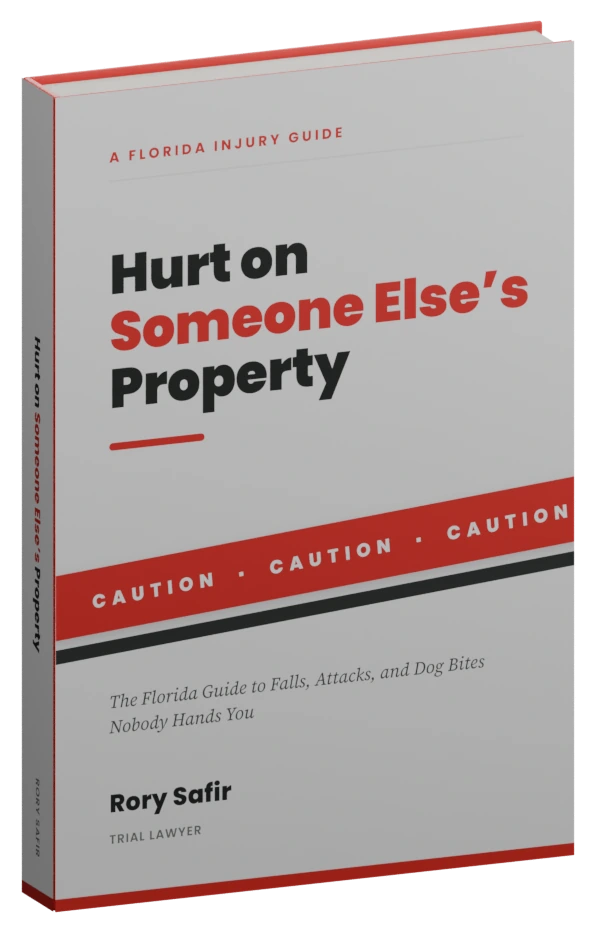
The book
Hurt on Someone Else’s Property
The evidence race, the notice fight, the owner’s records, and the honest truth that many of these cases have to be filed as lawsuits, in one plain-English book on the days and weeks after a fall. Free to Tampa Bay residents, with the digital edition to read the moment you ask.
Related: Florida negligent security overview, foreseeability and prior crime, the apartment presumption, Tampa negligent security, and about Rory Safir.
Free guide No. 23
Attacked on Someone Else’s Property
The civil case nobody tells crime victims they have: foreseeability, the apartment presumption, the evidence race, and the deadlines, in plain English. Free, and one request unlocks the whole Safir Guides library.