
Parking lots and garages are where a great many of these crimes happen, because they are isolated, often poorly lit, and easy for an attacker to wait in and escape from. When a business or property owner invites the public into a lot it knows is dangerous and does nothing about it, an attack there can support a negligent security claim.
The duty in a parking area
A business that draws customers, or a property owner that operates a garage, controls that space and owes the people it invites a duty of reasonable care. Where crime is foreseeable, reasonable care reaches the security of the lot itself: whether it is lit, whether the cameras work, whether access is controlled, and whether anyone is watching. A lot left dark and unmonitored in a high-crime area is a setting these cases are built on.
Parking lots and garages are where many of these attacks happen, and whether the property owner should have seen it coming is answered in the criminal record I have spent my career reading. From my years in criminal courtrooms I go through police reports, crime data, and arrest histories in a way most injury lawyers never learn to, so I can show the pattern of prior crime that made your assault foreseeable. Dim lighting, blind corners, no cameras, and no patrols after a string of incidents are choices, and an owner answers for the harm those choices invite. I represent injured people, not insurance companies, and I am a trial lawyer who came up as a public defender, tried numerous cases, and cross-examined witnesses constantly, so I am prepared to put your case in front of a jury, which is often what moves an insurer to pay fair value. I handle your case personally, from the first call through trial. Learn more about my background.
Why parking areas are where these crimes happen
Parking lots and garages are, by their nature, where a great many premises crimes occur, and understanding why is the start of these cases. They are often isolated and quiet, poorly lit at the edges and in the corners, full of blind spots between and behind vehicles, and easy for someone to approach unseen and leave quickly. A person walking to their car alone, hands full, distracted, is an easy target in a place designed for cars rather than for safety. Owners and operators of these lots know all of this, because it is well understood in the industry, which is exactly why the law expects them to provide reasonable security to the people they invite to park. When a lot was left dark, its cameras were absent or broken, its access uncontrolled, and its history of crime ignored, the setting that made the attack easy was the owner’s to fix and it did not.
What reasonable security looks like
There is no single checklist, because the measures scale with the risk. Adequate lighting and working surveillance are the baseline. In higher-risk locations, controlled or gated access and visible patrols may be what reasonable care requires. The point is comparison: what a careful owner aware of the danger would have done, measured against what this owner left undone.
Who controlled the lot
Parking cases often have more than one possible defendant. The store that drew you there, the company that owns the building, the operator that runs the garage, and the management company that maintains it may each share responsibility depending on who controlled and maintained the area. Identifying every party with a duty, and a policy, is part of the work.
Sorting out who owned the danger
One question that comes up early in a parking case is who was responsible for the lot, because it is not always the business a victim was visiting. A parking area might be owned by a property company, operated by a separate parking management firm, shared among several tenants of a shopping center, or controlled by a municipality, and the duty to secure it follows control. Figuring out who owned, operated, and was responsible for security in that specific lot is essential, both to name the right party and to reach the right insurance. From there, the case is built like any negligent-security case: the crime history for the lot and the surrounding area to show the danger was foreseeable, the conditions at the time, the dark corner, the dead camera, the broken gate, documented before they can be quietly repaired, and the reasonable measures that would have prevented or reduced the attack. Sorting out control and proving foreseeability are the two pillars, and both take the kind of prompt investigation these cases require.
Proving foreseeability
As in every negligent security case, foreseeability turns on prior crime: incidents in the same lot, at the same property, and in the immediate area, drawn from police records and crime data. Pairing that history with the physical conditions, the burned-out lights and the cameras pointed at nothing, is how the case comes together, as I describe on foreseeability and prior crime.
The book
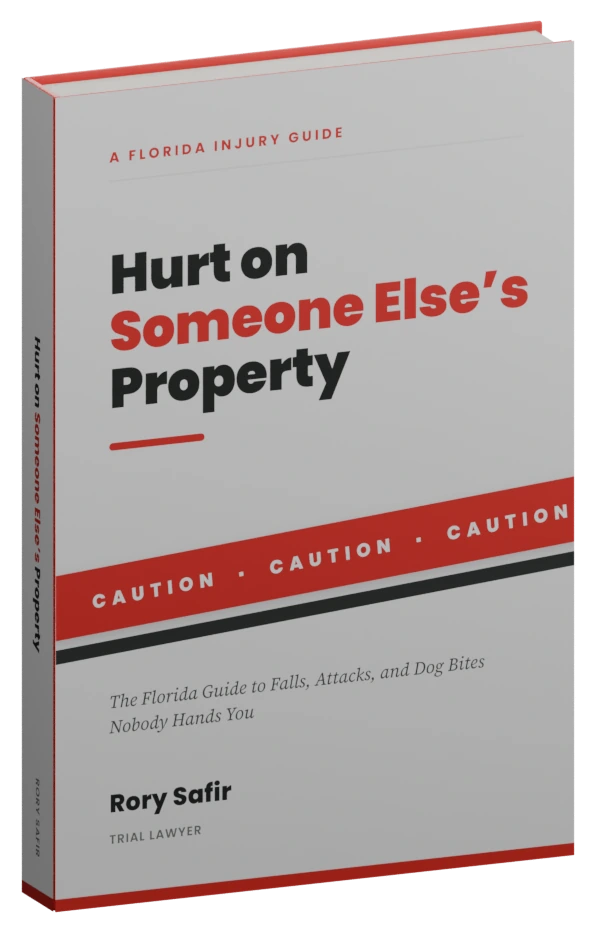
Hurt on Someone Else’s Property
The evidence race, the notice fight, the owner’s records, negligent security, and dog bites, in one plain-English book on the days and weeks after you are hurt on someone else’s property. Free to Tampa Bay residents hurt on someone else’s property, with the digital edition to read the moment you ask.
Deadlines
For an injury on or after March 24, 2023, Florida generally gives you two years to bring the negligence claim against the property owner under Fla. Stat. 95.11. A separate claim against the attacker for the assault or battery carries a longer four-year window. Crime scene evidence and video are often gone within weeks, so the real deadline for preserving proof comes long before the legal one.
Parking lots and garages are where a huge share of these attacks happen, and rarely by accident, because a dark, unwatched lot is a setting an owner chose to leave that way. I work out who controlled the lot and owed the duty, and I document the conditions and the crime history before either can be fixed or forgotten. I represent injured people, not the companies that ran the lot, and I hold whoever was responsible for that space to the security the people parking there were owed.
Common Questions
Can I sue if I was attacked in a parking lot or garage?
Often, yes. A business or property owner that invites the public into a parking lot or garage owes a duty of reasonable care, and in areas with foreseeable crime that includes lighting, cameras, and sometimes patrols. An attack in a dark, unmonitored lot with a history of crime can support a negligent security claim.
What security should a parking lot or garage have?
It varies with the location and its crime history, but adequate lighting, working surveillance cameras, controlled or gated access, and visible patrols are common measures. The question is what a reasonable owner would have done given the known risk, and what this one failed to do.
Who is responsible, the business or the property owner?
It can be either or both, depending on who controlled and maintained the lot. A store, the owner of the building, a parking operator, or a management company may each bear responsibility. Sorting out who controlled the area is part of identifying every source of recovery.
What proves the attack was foreseeable?
Prior crime in and around the lot. Police reports, prior incidents at the same location, and crime patterns in the immediate area show whether the owner should have anticipated the danger and improved security. Poor lighting and broken cameras often feature heavily.
Does it matter that the attacker was never caught?
No. Your claim against the property owner is for failing to provide reasonable security against a foreseeable crime, and it stands whether or not the attacker is identified or arrested.
Related: Negligent security overview, Foreseeability and prior crime, Apartment assaults and shootings, Gas station and store crime, and About Rory Safir.
Free guide No. 23
Attacked on Someone Else’s Property
The civil case nobody tells crime victims they have: foreseeability, the apartment presumption, the evidence race, and the deadlines, in plain English. Free, and one request unlocks the whole Safir Guides library.
This page is general information about Florida negligent security law, not legal advice, and it does not create an attorney-client relationship. The governing authorities include Fla. Stat. 768.81 and 95.11, applied with Florida case law on a property owner’s duty of reasonable care regarding foreseeable third-party crime in areas it controls. Every case is different, and past results do not guarantee a similar outcome. The hiring of a lawyer is an important decision that should not be based solely on advertisements.