When a careless act takes someone you love, grief arrives with a stack of legal questions right behind it, and facing both together can feel impossible. Families across Tampa live through this after wrecks on the interstates and on city streets, and Florida law gives them a way to hold the person or company at fault to account. Below I walk through how a wrongful death claim works in this city and the part of the load I can take off your shoulders.
How a Florida wrongful death claim works
How a wrongful death claim works in Florida
Florida treats a death caused by negligence as its own kind of claim, with a procedure all its own. The lawsuit runs through a personal representative of the estate, a person the court appoints, who brings a single action for the estate and every surviving family member together; a spouse or child takes part through that representative. Almost any fatal negligence can support the claim, whether a crash, a wreck involving a truck or motorcycle, a fall, or a dangerous property. In general the family has two years from the date of death to file. Our Florida wrongful death overview covers the basics, and a separate guide explains the personal representative and probate.
Who the law lets recover
The statute names the people who can recover and calls them survivors. That group covers a spouse, children, and parents, along with blood relatives and adoptive siblings who relied on the person who died, in part or in full, for support or services. Children count as minor children until they turn twenty-five, an age many families don’t expect. Each survivor’s claim stands apart, so a defense raised against one person leaves another’s recovery untouched. Identifying every survivor correctly, so that no one with a rightful claim is left out, comes near the start of the work. For more detail, see our guide to who can recover.
What a wrongful death case can recover
Damages divide between the survivors and the estate. Survivors may recover the support and services the person would have provided, the companionship, guidance, and protection they lost, and their own mental pain and suffering. The estate may recover wages lost between the injury and the death, the net accumulations the person would likely have built over a lifetime, and the medical and funeral bills the death caused. Nobody can responsibly put a figure on a case during an early phone call. Value depends on the family, the facts, and the proof, and documenting each of these losses carefully is much of what the work involves. Our guide to wrongful death damages walks through each category.
Families in this situation need two things at the same time: patience with their grief and a demanding, records-heavy effort to prove how the death happened and what it cost. Reconstructing the event, gathering the records, and cross-examining the witnesses the other side hires is the work my practice is built around. I represent families, never insurance companies. I started out as a public defender, trying cases and questioning witnesses day after day, so I’m prepared to put a Tampa case in front of a jury when accountability calls for it. I work on every case myself, and I know this city’s roads, courtrooms, and neighborhoods. Learn more about my background.
The deadline, and why it matters early
Florida generally gives a family two years from the date of death to file, and a claim filed after that’s usually lost for good. A few exceptions exist: a claim against someone who caused the death by murder or manslaughter can be brought at any time, and a claim against a government body follows separate notice rules. Counting on an exception is a gamble no family should take. Time matters in other ways as well, because the court must appoint a personal representative before the suit can be filed, while witnesses forget and physical evidence disappears. Starting early builds a stronger case. Details are in our guide to time limits and deadlines.
Where fatal incidents happen in Tampa
Many of the fatal crashes in Tampa happen on Interstate 4, Interstate 275, US-41, and US-301, and other deaths grow out of truck and motorcycle wrecks, dangerous property, or some other kind of negligence. The task stays the same whatever the setting: showing exactly how the death happened and everything it cost your family.
Death investigations and crash records in Tampa
Deaths in Tampa that call for a medical examiner’s review go to Hillsborough County Medical Examiner District 13, which serves Hillsborough County alone from its office at 11025 N. 46th St. Its findings on how a person died often become key evidence in a wrongful death claim, and I request them early.
When the Tampa Police Department handled a fatal crash, copies of its report are requested through the department, headquartered at 411 N. Franklin St. I gather that report alongside the medical examiner’s records so the account of your loved one’s death rests on documents from the start.
Where your Tampa case is heard
Tampa sits in Hillsborough County, inside Florida’s Thirteenth Judicial Circuit, and a wrongful death suit from the city is usually filed with the circuit civil divisions at the George E. Edgecomb Courthouse, 800 E. Twiggs St., downtown. Plenty of claims settle with the insurer without any lawsuit, yet the settlements that reflect a case’s real value come from preparing it for trial at the outset, which shows the insurer the family means business. My aim throughout is to shoulder the case so your family has room to grieve.
Comparative fault, and answering the blame
Expect the defense to suggest the person who died was partly to blame, even in a fatal case. Florida’s comparative fault rule trims what the defense owes by any share of fault it can assign, and a person found more than half at fault for their own harm recovers nothing. The response has to rest on proof: the reconstruction, the records, and a clear, documented account of what happened. A grieving family should not have to carry that dispute on its own, so I take it on and give the case the seriousness it calls for while you mourn.
The book
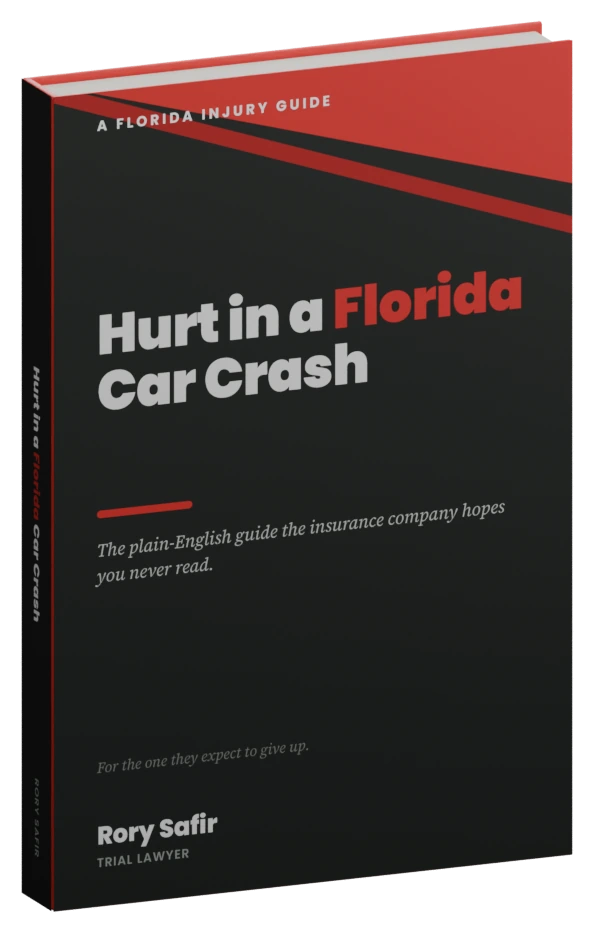
Hurt in a Florida Car Crash
The insurance company’s playbook, the 14-day PIP rule, the serious injury threshold, and Florida’s two-year deadline, in one plain-English book on the hours, days, and weeks after a crash. Free to Tampa Bay crash victims, with the digital edition to read the moment you ask.
Common Questions
Who can file a wrongful death claim in Hillsborough County?
Under Florida law the claim is filed by the personal representative of the person’s estate, on behalf of the surviving family and the estate. Individual family members do not file on their own, though they are the ones the claim is meant to benefit.
Who in the family can recover?
Florida law allows the spouse, the children, the parents, and blood relatives or adopted siblings who depended on the person for support. Children under twenty-five are treated as minor children, and each survivor’s claim is considered on its own.
What can a wrongful death case recover?
The survivors can recover for lost support and services, lost companionship and guidance, and their own mental pain and suffering, and the estate can recover lost earnings, lost future accumulations, and medical and funeral expenses.
How long do I have to file after a Hillsborough County death?
Generally two years from the date of death. A death caused by murder or manslaughter has no deadline, and claims against a government entity have separate rules, but an early review protects your family’s rights and the evidence.
What will a Hillsborough County wrongful death case cost me?
These cases are handled on contingency, so you pay no attorney’s fees unless there is a recovery, and case costs are advanced rather than paid up front. The first strategy session is free and without pressure.