When someone dies because another person or company was careless, Florida law gives the family a way to hold the responsible party accountable. It is called a wrongful death claim, and it follows its own set of rules about who may bring it, who may recover, and what the law allows. None of it brings your loved one back. What it can do is secure your family’s future and force accountability.
Florida funnels the claim through one person, the personal representative, who brings a single action for everyone. The survivors do not each sue on their own, and the recovery is split between the survivors and the estate.
What a wrongful death claim is
Under Florida’s Wrongful Death Act, sections 768.16 through 768.26, a wrongful death occurs when a person dies because of the wrongful act, negligence, or default of another, in any situation where the person could have brought an injury claim had they survived. The same carelessness that would support an injury case becomes a wrongful death case when the injury proves fatal. The law is meant to shift the loss from the grieving family to the party that caused it.
Losing someone to another’s carelessness is not something a lawsuit can fix, and I will not pretend otherwise. What I can do is carry the legal weight so your family can grieve. I represent families, not insurance companies, and I learned to try a case in the courtroom as a public defender, trying numerous cases and cross-examining witnesses constantly. I handle the wrongful death claim personally from the first call, coordinate the probate steps Florida law requires, and stay willing to put the case in front of a jury when the other side will not be fair, which is often what moves an insurer to pay fair value. Learn more about my background.
Who brings the claim, and who recovers
Florida funnels the claim through one person: the personal representative of the deceased person’s estate, who brings a single action for the benefit of everyone entitled to recover. Those people, the survivors, are defined by statute and generally include the spouse, the children, and the parents, with certain dependent relatives in limited cases. The estate itself also recovers some categories of loss. More on who can recover and on the personal representative and probate.
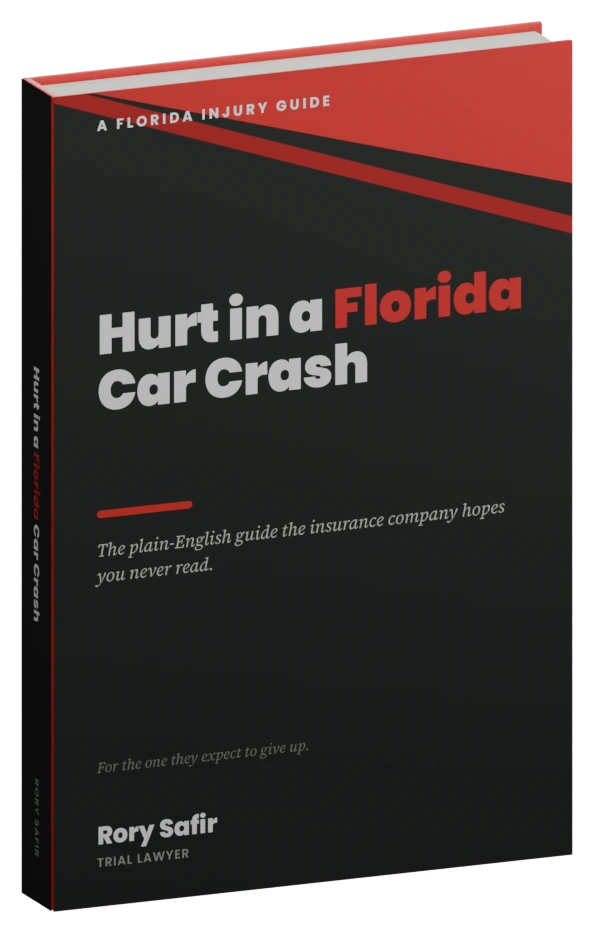
The book
Hurt in a Florida Car Crash
The insurance company’s playbook, the 14-day PIP rule, the serious injury threshold, and Florida’s two-year deadline, in one plain-English book on the hours, days, and weeks after a crash. Free to Tampa Bay crash victims, with the digital edition to read the moment you ask.
What the law allows the family to recover
The recovery is split between the survivors and the estate. Survivors may recover for the support and services they lost and for their own loss of companionship, guidance, and mental pain and suffering. The estate may recover the deceased person’s lost earnings, the savings that would have accumulated, and the medical and funeral expenses. The full picture is laid out on wrongful death damages.
The most common causes
Most wrongful death claims grow out of the same events that cause serious injuries: fatal car, truck, and motorcycle crashes, drunk-driving deaths, falls and drownings on dangerous property, and similar preventable tragedies. The cause shapes the proof and the parties, as I cover on fatal crashes and common causes.
| Element | The Florida rule |
|---|---|
| Who files | Only the personal representative of the estate, in one action for all. |
| Who recovers | Survivors defined by statute (spouse, children, parents, and certain dependents) and the estate. |
| What is recovered | Survivor losses (support, companionship, mental pain and suffering) and estate losses (earnings, net accumulations, medical and funeral). |
| The deadline | Generally two years from the date of death, with exceptions for manslaughter and government defendants. |
Each piece has its own statute and its own proof. See the linked pages for how each works.
The deadline
A wrongful death claim generally must be filed within two years of the date of death under Fla. Stat. 95.11. The evidence, from the records to the witnesses, is easier to preserve early, so the sooner the work begins, the stronger the claim. A death caused by murder or manslaughter has no deadline at all, and claims against a government entity follow separate notice rules.
Common Questions
Who can file a wrongful death lawsuit in Florida?
Only the personal representative of the deceased person's estate may file the claim, and it is brought on behalf of the survivors and the estate together. The survivors do not each sue on their own. If there is no will naming a personal representative, the probate court appoints one.
Who counts as a survivor entitled to recover?
Florida's statute defines survivors as the spouse, children, and parents, and in limited cases blood relatives or adoptive siblings who depended on the deceased for support. Each category may recover different damages depending on their relationship to the person who died.
What can a family recover in a wrongful death case?
The survivors may recover for lost support and services and for their own loss of companionship, guidance, and mental pain and suffering, while the estate may recover lost earnings, lost net accumulations, and medical and funeral expenses. Where the conduct was egregious, punitive damages may also be available.
How long do we have to bring a wrongful death claim?
Generally two years from the date of death under Fla. Stat. 95.11. There are exceptions: a death caused by murder or manslaughter has no deadline, and claims against a government entity carry their own notice rules. Acting early still matters, because evidence fades.
Do we have to wait for a criminal case to finish?
No. A wrongful death claim is a civil case, separate from any criminal prosecution, and it does not depend on a conviction. The two proceed on different timelines and answer different questions, and the civil claim is where the family's compensation is pursued.
Related: How a Florida injury claim works, Wrongful death in a drunk-driving crash, Who can recover, Wrongful death damages, The personal representative, Time limits, Fatal crashes, Proving the claim, and Wrongful death in a nursing home.
This page is general information about Florida wrongful death law, not legal advice, and it does not create an attorney-client relationship. The governing authority is the Florida Wrongful Death Act, Fla. Stat. 768.16 through 768.26, with the limitations period in Fla. Stat. 95.11 and, for government defendants, the notice requirements of 768.28. Every case is different, and past results do not guarantee a similar outcome. The hiring of a lawyer is an important decision that should not be based solely on advertisements.