In Brief
Florida channels every wrongful death case through one statute: the case is brought one way, for the benefit of specific survivors, on a clock shorter than most families expect. This post covers who can recover, when the punitive cap can lift, and why a criminal case never replaces the civil one.
On This Page
When a family loses someone to another person’s carelessness, the legal questions arrive at the worst possible time, and the answers are not obvious. Florida channels every one of these cases through a single statute, the Wrongful Death Act, and that statute decides who may recover, what they may recover, and how long they have to act. Understanding it early matters, because the deadlines are shorter than many families expect and the value of the case can turn on facts that fade quickly.
The case is brought one way, for the benefit of specific survivors
Under Florida law, a wrongful death action is filed by the personal representative of the person who died, but it is brought for the benefit of the estate and a defined group of survivors. Those survivors typically include the spouse, the children, and the parents, and in some circumstances a blood relative or adoptive sibling who depended on the person who died. Each eligible survivor can recover for their own losses, which may include the loss of the person’s companionship, guidance, and support, and a spouse and children can recover for their mental pain and suffering. The estate itself can recover things like lost earnings and medical and funeral expenses. Who qualifies, and for what, depends on the family’s specific circumstances.
The clock is shorter than most families think
Florida generally gives a family two years from the date of death to file a wrongful death lawsuit. Two years can feel like a long time in the fog of grief, but a strong case is built on evidence that scatters fast, the scene, the vehicles or the property, the records, and the memories of witnesses, so the practical window to investigate is much shorter than the legal deadline suggests. Waiting is the most common way a family unintentionally weakens or loses a claim.
When the wrongdoing was extreme, the punitive cap can lift
Florida usually caps punitive damages, the damages meant to punish and deter, at the greater of three times the compensatory damages or five hundred thousand dollars. But that cap is lifted in specific situations, including when the harm was caused by a driver who was impaired by alcohol or drugs. That is why a death caused by a drunk or drugged driver can reach a category of accountability that an ordinary negligence case cannot, and it is one of the reasons the impairment evidence in these cases deserves close attention.
A criminal case does not replace your civil case
Families are often told to wait and see what happens in the criminal court, and that advice can quietly cost them. The criminal case is the State punishing the wrongdoer, where the result is jail, probation, or fines, and the family are witnesses. The civil wrongful death case is the family’s own claim, where the result is compensation, and it does not depend on a criminal conviction. The two run on separate tracks, and a conviction, when it comes, can become strong evidence in the civil case rather than a substitute for it.
I came to this work from years in the courtroom, and in a wrongful death case that background matters most where the death involved impairment or where the cause comes down to reading the physical and technical evidence. I help families understand who can recover and for what, I move quickly to protect the proof before it is gone, and I represent grieving families, not the insurers on the other side. If your family lost someone to another’s carelessness anywhere across the Gulf Coast, the sooner the case is investigated, the more of it can be protected. Learn how I handle Florida wrongful death claims.
Hurt in Florida? Let’s talk about your case.
The insurance company is already working to pay you less. A free strategy session is the fastest way to understand what your claim is really worth.
The book
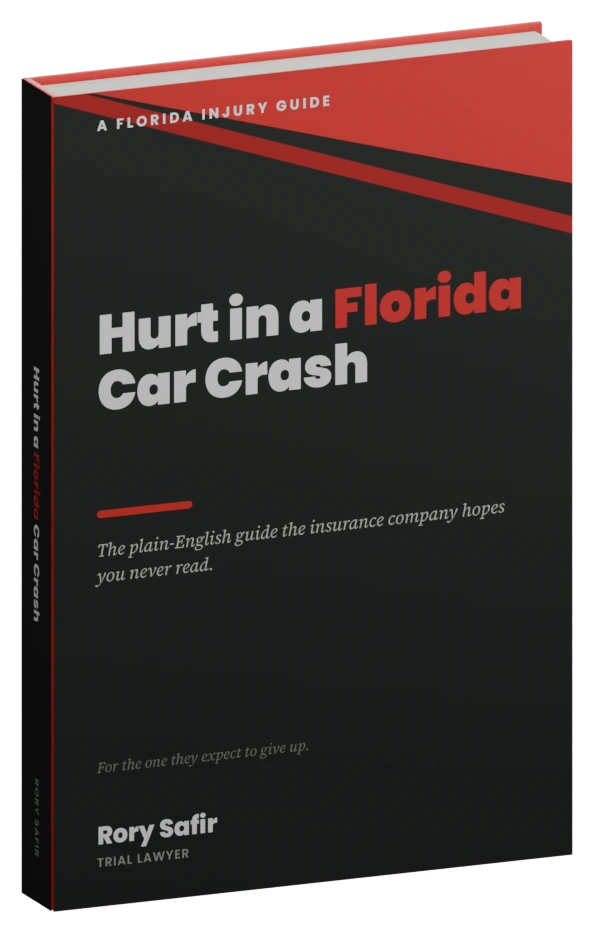
Hurt in a Florida Car Crash
The insurance company’s playbook, the 14-day PIP rule, and Florida’s two-year deadline, in one plain-English book on the hours, days, and weeks after a crash. Free to Tampa Bay crash victims, with the digital edition to read the moment you ask.

About the author
Rory Safir is a Florida injury and criminal defense lawyer and one of a handful of ACS-CHAL Forensic Lawyer-Scientists in the state. He builds injury cases the way he builds a defense, from the evidence up: the crash reconstruction, the records, and the cross-examination of the insurer’s experts.
Keep reading
Further Reading
- Fla. Stat. 768.16-768.26, the Florida Wrongful Death Act, starting section, Online Sunshine
- Fla. Stat. 95.11, limitations of actions, where the deadline lives, Online Sunshine
WRITTEN AND REVIEWED BY
Rory Safir, ACS-CHAL Forensic Lawyer-Scientist
He is the author of The Florida DUI Trial Manual, an NHTSA-qualified instructor in the standardized field sobriety exercises, faculty of the National College for DUI Defense, and a former Assistant Public Defender in the Thirteenth Judicial Circuit.
This post is general information about Florida law as of this writing. It is not legal advice about any specific case.