If you were assaulted, robbed, or shot on someone else’s property in Manatee County, the person who hurt you is only half the story. Florida requires property owners to provide reasonable security against crime they should have foreseen, and when they fail, the injured person can hold the property responsible. That second case is usually the one that matters, because the attacker is often never caught while the owner had the duty, the ability, and the insurance to answer.
Where these cases arise
Manatee’s negligent security cases follow its growth: the apartment corridors off Cortez and State Road 70, the retail and entertainment districts around the malls, and the Gulf-tourism properties on the barrier islands where seasonal crowds and thin off-season staffing meet.
Foreseeability is the whole case
An owner’s duty to protect people from a third party’s crime turns on whether that crime was foreseeable, so every case is a history lesson about the property. Police calls-for-service, prior incident reports, and crime in the surrounding blocks establish what the owner knew or should have known, and a documented pattern of violence paired with thin security is where these cases are strongest. The proof is documentary, and it starts disappearing the day of the attack.
Two sources of recovery, and where your case is heard
There are usually two wrongdoers and only one who can pay. The attacker is rarely identified or solvent; the property owner carries commercial liability insurance and had the power to prevent the harm. Move quickly to get the police report number, photograph the conditions, and have preservation letters sent before the surveillance overwrites. A Manatee County case is filed in the Twelfth Judicial Circuit at the Manatee County Judicial Center in downtown Bradenton, generally within two years. My years in the criminal courts were spent inside the very records these cases are built from.
The firm serves all of Manatee County, with dedicated city pages for Bradenton and Lakewood Ranch.
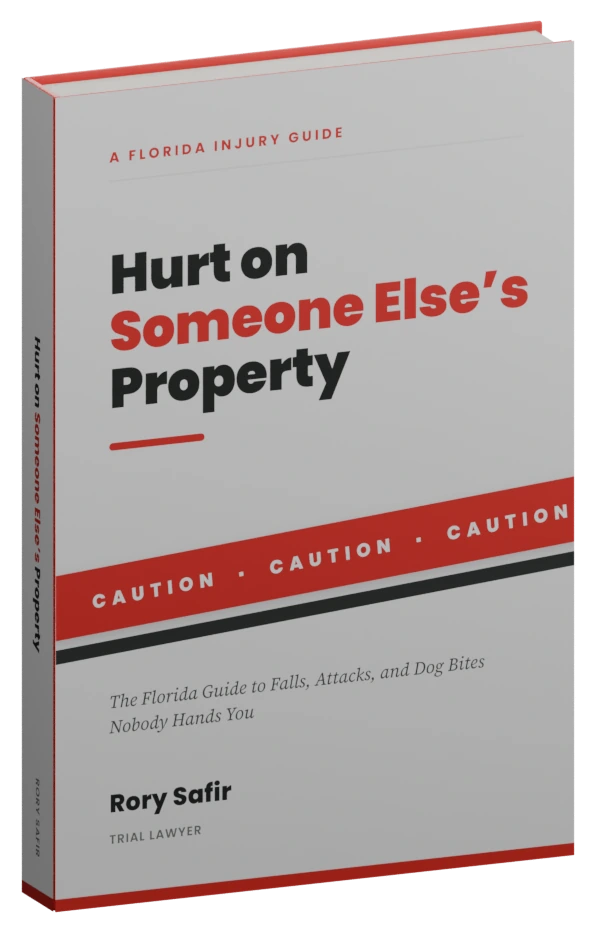
The book
Hurt on Someone Else’s Property
The evidence race, the notice fight, the owner’s records, and the honest truth that many of these cases have to be filed as lawsuits, in one plain-English book on the days and weeks after a fall. Free to Tampa Bay residents, with the digital edition to read the moment you ask.
Common Questions
The person who attacked me was never caught. Do I still have a case?
Possibly. The claim is against the property owner, not the attacker, and it turns on whether the owner should have foreseen the crime and failed to provide reasonable security. An unidentified attacker does not defeat it.
What makes a negligent security case strong?
A documented history of prior crime at or near the property, paired with security that was missing, broken, or plainly inadequate to the known risk. That pattern is proven from the owner’s own records and the public police data.
What is the deadline?
Generally two years for the negligence claim, and the evidence race is far shorter, because surveillance video records over itself in days. Early legal help preserves what the case needs.
Related reading: negligent security, foreseeability and prior crime, and about Rory Safir.