
In Lakewood Ranch, as anywhere else, a dark stairwell or an unlocked gate can be all a criminal needs. When a crime on someone’s property hurts you because the owner skipped reasonable security, I bring the claim against that owner.
Calls for service tell the property’s history
If deputies responded, the Manatee County Sheriff’s Office takes records requests and lists its calls for service. A string of earlier calls to the same address is how foreseeability gets proven, and foreseeability decides whether the owner owed you protection against a stranger’s crime. Get the report number before you leave the scene, and photograph any broken light, lock or gate.
Condos and townhomes count
Florida’s apartment presumption, section 768.0706, covers more than apartments. It reaches townhouses and condominiums too, when there are at least five units on one parcel. The owner has to prove it substantially met the list, which includes lit walkways and common areas from dusk to dawn, locking windows and sliding doors, and fob or key gates at the pool. It doesn’t cover shops or restaurants at all, and proof that a listed measure was missing or broken can overcome it.
Where it’s heard, and how long you have
A Lakewood Ranch case is filed in the Twelfth Judicial Circuit at the Manatee County Judicial Center in downtown Bradenton, generally within two years under section 95.11. Ask me early, while the video still exists, because cameras can record over themselves within days and I need time to send a preservation letter. I tried criminal cases as a public defender before this work, so I know how the police file gets built.
See also the Manatee County negligent security page.
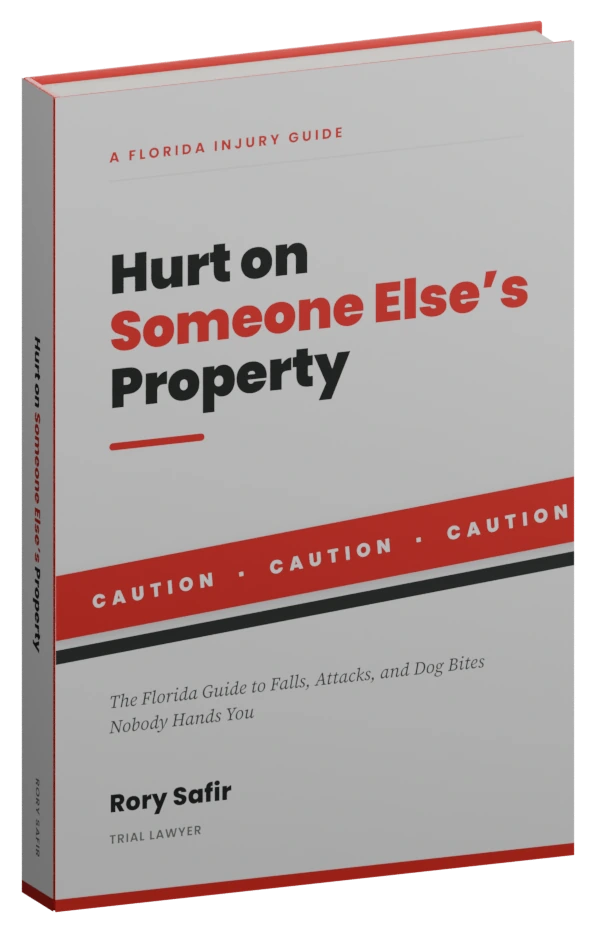
The book
Hurt on Someone Else’s Property
The evidence race, the notice fight, the owner’s records, and why many of these cases end up filed as lawsuits, in one plain-English book on the days and weeks after a fall. Free to Tampa Bay residents, with the digital edition to read the moment you ask.
Common Questions
Do I have a case if my attacker was never caught?
Possibly. The claim is against the property owner, not the attacker, and it turns on the owner’s failure to guard against foreseeable crime. An arrest is not required.
How is foreseeability proven?
Police calls-for-service to the address, the property’s own incident reports, and crime in the surrounding blocks establish what the owner knew or should have known.
The property says it had security. Does that end it?
No. The question is whether the security was reasonable against the known risk and whether it was actually working. A camera that did not record and a guard post that sat empty are failures wearing the costume of security.
Related reading: negligent security, foreseeability and prior crime, and about Rory Safir.