When you are attacked on a property in Sarasota, the criminal case against your attacker is only half the story. The civil claim is against the property owner whose security failures made the crime possible, and it turns on foreseeability and the evidence the owner controls. I represent crime victims in Sarasota against the properties that failed them.
The evidence race starts the night of the attack
Surveillance systems record over themselves, usually within days. The broken gate gets fixed, the lighting gets replaced, the guard schedule gets rewritten. A preservation letter sent early, demanding the video, the incident reports, and the staffing records be kept, is often the difference between a strong case and an argument. Get the police report number, photograph the dark corners and broken locks, and write down witness names while they are findable.
The apartment presumption is a hurdle, not a wall
A 2023 Florida law gives multifamily owners who provided a checklist of security measures a presumption against liability. It is rebuttable, and the complexes with the worst crime histories are rarely the ones that met the checklist, and it covers only multifamily residential property, not the hotels, bars, garages, and stores where much violence lands.
Where the case is heard
A Sarasota case is filed in the Twelfth Judicial Circuit at the Silvertooth Judicial Center in downtown Sarasota, generally within two years, though the evidence race is far shorter. I put years of fluency with police records and how violence unfolds at an address to work for the injured.
See also the Sarasota County negligent security page.
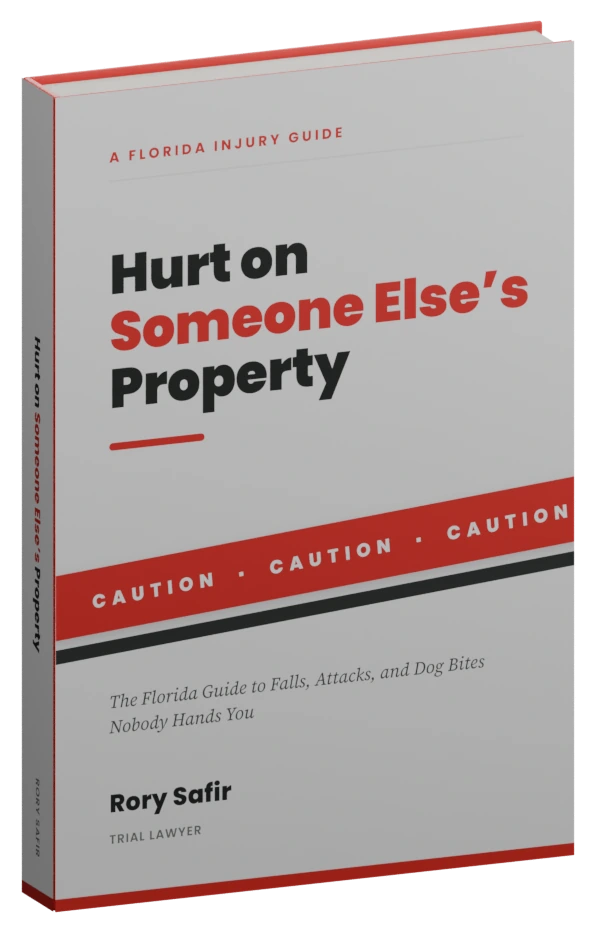
The book
Hurt on Someone Else’s Property
The evidence race, the notice fight, the owner’s records, and the honest truth that many of these cases have to be filed as lawsuits, in one plain-English book on the days and weeks after a fall. Free to Tampa Bay residents, with the digital edition to read the moment you ask.
Common Questions
Do I have a case if my attacker was never caught?
Possibly. The claim is brought against the property owner, not the attacker, and it turns on the owner’s failure to guard against foreseeable crime. An arrest is not required.
How is foreseeability proven?
Police calls-for-service to the address, the property’s own incident reports, and crime in the surrounding blocks establish what the owner knew or should have known. A documented pattern of violence is the core of these cases.
The property says it had security. Does that end it?
No. The question is whether the security was reasonable against the known risk and whether it was actually working. A camera that did not record and a guard post that sat empty are failures wearing the costume of security.
Related reading: negligent security, apartment assaults and shootings, and about Rory Safir.