
A fall on a wet floor in a Venice grocery store or condo lobby can end with a broken hip, and for an older person that can mean surgery, rehab and months away from home. If that happened to you or someone in your family, I can help you sort out whether the business that controlled the floor is responsible for it. The answer comes from what that business knew before you fell, and from records it keeps itself.
What a Florida slip-and-fall claim requires
What the store knew, and when
When someone slips on a spill, a leak or tracked-in water inside a business, Florida’s section 768.0755 puts the burden on the injured person. You have to show the business had actual or constructive knowledge of the dangerous condition and should have done something about it. Actual knowledge is the easier idea: an employee saw the puddle, or a customer reported it. Constructive knowledge is proof by circumstance, and the statute allows two ways to get there. One is that the condition sat there so long that a business using ordinary care should have found it. The other is that it happened with enough regularity to be foreseeable, like a cooler that drips onto the same aisle every afternoon.
That’s why I ask for the camera footage and its timestamps, the sweep and inspection logs, the maintenance records and any reports of earlier falls in the same spot. The business keeps every one of those, and some of them don’t last long. Write down what you remember about the spill as soon as you can. Footprints or cart tracks through it, dirt in it or edges that had started to dry can all suggest it had been there a while. A broken step or a heaved walkway isn’t a substance on the floor, and the statute says it doesn’t change the ordinary duty of care a business owes, so those claims are built a little differently. Our trip and fall page explains how, and the Florida premises liability overview covers the wider ground.
When a fall breaks a bone
A hip or wrist fracture shapes everything about the months that follow. Head injuries happen when someone strikes the floor or a shelf edge on the way down, and a hard landing can hurt the spine or tear a shoulder or knee as you try to catch yourself. For an older person, one fracture can start a long slide in health and independence, and that loss belongs in the claim alongside the bills.
Sarasota County’s Level II trauma center is Sarasota Memorial Hospital at 1700 S. Tamiami Trail. Wherever you’re treated, go promptly and keep your follow-up visits. Those records are written by doctors and nurses who don’t work for the store, and they’re what ties the injury to the fall. A gap in treatment gives an insurer room to argue that something else caused your pain.
Keep a file as you go: the bills, the receipts for prescriptions and for a walker or shower chair, the days of work you missed, and a few lines each week about what you can’t do anymore. Those details become the damages part of the claim, and they’re hard to rebuild from memory a year later.
The South County Courthouse, and two years
Venice is in Sarasota County, in Florida’s Twelfth Judicial Circuit. The circuit’s South County Courthouse is at 4004 S. Tamiami Trail in Venice, and the Sarasota County Clerk keeps an office in the same building. The circuit’s main courthouse in the county is the Judge Lynn N. Silvertooth Judicial Center in downtown Sarasota. Plenty of these claims settle through insurance without a lawsuit, but I build every file as if a Sarasota County jury will see it.
Florida generally gives you two years to file a negligence suit, under section 95.11(5)(a). Don’t let that number lull you. Camera systems can record over old footage and staff turn over, so the evidence can be gone long before the deadline is. I send the business a letter early asking it to keep the video, the logs and the incident report.
If they say you weren’t looking
Expect the business or its insurer to say you weren’t watching where you were walking. Florida uses comparative fault. Under section 768.81, your share of the blame reduces what you recover, and if a jury finds you more than 50 percent at fault for your own injury, you can’t recover at all. I answer that argument with proof about the floor, the lighting and whether anyone put out a warning sign.
If you’re able, report the fall before you leave and ask for a written incident report. Photograph the spot before anyone cleans it, get names from witnesses and employees, and keep the shoes and clothes you had on. Hold off on giving a recorded statement or taking a quick settlement until you know how badly you’re hurt. If the insurer calls you, you can send them to me. I work for people who were hurt, not for businesses or the companies that insure them, and I handle every case myself. I started out as an Assistant Public Defender in the Thirteenth Judicial Circuit. Read more about my background.
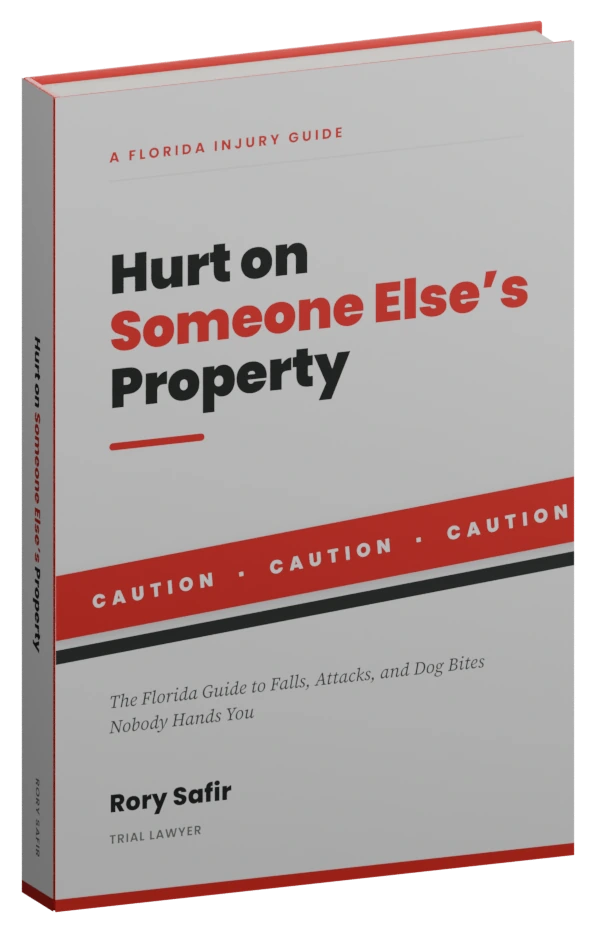
The book
Hurt on Someone Else’s Property
The evidence race, the notice fight, the owner’s records, and why many of these cases end up filed as lawsuits, in one plain-English book on the days and weeks after a fall. Free to Tampa Bay residents, with the digital edition to read the moment you ask.
Common Questions
Do I have a case if I fell in a Venice business?
Possibly. Under Florida law you generally have to prove the business had actual or constructive knowledge of the hazard and failed to fix it, which turns on evidence like surveillance footage, inspection logs, and prior incidents. A review of the specific facts is the way to know.
What do I have to prove in a Florida slip-and-fall?
For a fall on a spill or similar substance in a business, Florida Statute 768.0755 requires you to prove the business knew or should have known about the hazard and should have remedied it. Constructive knowledge is shown by how long the condition existed or that it happened with regularity.
How long do I have to file after a Venice fall?
For most fall injury claims the deadline is now two years from the date of the fall, shortened from four by a 2023 change in the law. Because the evidence in these cases disappears quickly, an early review is especially important.
Where would my Venice slip-and-fall case be heard?
Venice is in Sarasota County, part of Florida’s Twelfth Judicial Circuit, so a lawsuit would generally be filed in the Sarasota County civil court. Most claims resolve through insurance before a lawsuit is needed, but preparing the case as if it will be tried is what protects its value.
What will a Venice slip-and-fall case cost me?
These cases are handled on contingency, so you pay no attorney’s fees unless there is a recovery, and case costs are advanced rather than paid up front. The first strategy session is free.