After a drunk-driving crash, the impaired driver is the obvious defendant. What people do not always realize is that the bar, restaurant, or other establishment that put the alcohol in that driver’s hands can sometimes be held responsible too. In Florida, though, that path is narrow, narrower than in most states, so it takes a careful look at the facts to know whether a claim exists.
This is the kind of case my background is built for, because it turns on the alcohol and the proof of intoxication, which is the same ground I have worked from the other side for years. If a vendor may share responsibility for the crash that hurt you, it is worth finding out.
Florida’s Narrow Dram Shop Rule
Florida’s rule, in section 768.125, is sometimes called a reverse dram shop statute, because it starts by protecting vendors and then carves out only two exceptions. Serving a visibly intoxicated adult, by itself, does not create liability here, which surprises many folks.
| Situation | The rule |
|---|---|
| Serving an adult of legal drinking age | Generally no liability, even if the patron was visibly intoxicated |
| Serving a minor | A vendor who willfully and unlawfully serves alcohol to someone under twenty-one can be liable, tied to the misdemeanor in section 562.11 |
| Serving a habitual drunkard | A vendor who knowingly serves a person habitually addicted to alcohol can be liable, on a showing of the vendor’s knowledge |
| Social hosts | Generally not liable for serving adult guests, though furnishing alcohol to a minor is treated differently |
I represent injured people, not the bar or its insurance company. A dram shop case turns on proving a vendor over-served a customer who then caused harm, and my years defending impaired-driving cases give me a real edge in reading the alcohol evidence that shows it. I am a trial lawyer who came up in the courtroom as a public defender, trying numerous cases and cross-examining witnesses constantly, so I know how to hold an establishment’s story to the records rather than take its word that no one looked drunk. I handle your case personally from the first call through trial. I am willing to put the case in front of a jury, which is often what moves an insurer to pay fair value. Learn more about my background.
The Minor Exception
The first exception is for serving someone under the legal drinking age. A vendor who willfully and unlawfully furnishes alcohol to a person under twenty-one can be held liable when that person’s intoxication causes injury. The Florida Supreme Court has explained that this exception is tied to the criminal offense of furnishing alcohol to a minor in section 562.11, and that once a plaintiff proves the elements of that offense, the vendor’s conduct is negligence per se. See Ellis v. N.G.N. of Tampa, Inc., 586 So. 2d 1042 (Fla. 1991). Whether the establishment knew the person was underage can be shown by circumstantial evidence, such as the patron’s appearance and manner.
Read more on this exception, including the one situation where a private social host can be liable for furnishing alcohol to a minor: suing a bar or store for serving a minor.
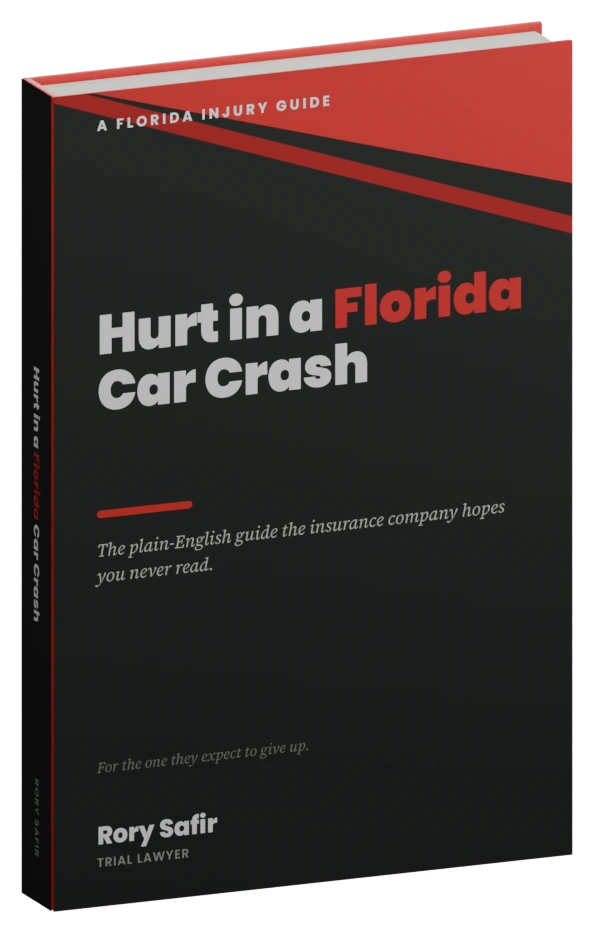
The book
Hurt in a Florida Car Crash
The insurance company’s playbook, the 14-day PIP rule, the serious injury threshold, and Florida’s two-year deadline, in one plain-English book on the hours, days, and weeks after a crash. Free to Tampa Bay crash victims, with the digital edition to read the moment you ask.
The Habitual-Drunkard Exception
The second exception is the one that comes up after many serious crashes: a vendor who knowingly serves a person habitually addicted to alcohol. Here the standard is different and, in one sense, lower. As the Florida Supreme Court held in Ellis, the statute requires only that the vendor acted knowingly, not willfully and unlawfully, and the claim is treated as ordinary negligence. The real battleground is knowledge, and it can be established by circumstantial evidence. Serving someone a lot of drinks on a single night is not enough on its own, but serving a regular a substantial number of drinks over many visits, where the staff knew the person well, can be evidence a jury may weigh.
A good illustration of the kind of proof that works is in Peoples Restaurant v. Sabo, 591 So. 2d 907 (Fla. 1991), where the driver was a regular the bartenders knew by name, who was routinely poured double shots and had consumed the equivalent of around twenty shots before the crash. Importantly, the older requirement of written notice from the person’s family is not necessary to prove that a vendor knowingly served a habitual drunkard.
Read more on this exception and how knowledge is proven: suing a bar for knowingly serving a habitual alcoholic.
Intoxication Is Not the Same as Criminal Impairment
One nuance that gets these cases wrong in the hands of someone unfamiliar with the science: the civil question of a person’s intoxication is not the same as the criminal question of impairment. The criminal case turns on a legal threshold and the presumptions that come with a breath or blood result. The civil dram shop case asks a different question about the patron’s condition and what the server knew or did, and proving it is its own task. Understanding how the alcohol evidence is generated and what it does and does not show is exactly the part of these cases my forensic background is built for.
Where the Vendor Fits in Your Case
A dram shop claim does not replace the case against the driver, it adds to it. Bars, restaurants, clubs, and in some situations an employer that hosted a function can be an additional defendant, which can mean another layer of insurance and recovery beyond the driver’s policy. That matters most when the driver carried little or no coverage, which is common in these crashes. The underlying crash claim is covered on the drunk-driving crash victims page, and a dram shop claim is built alongside it.
Deadlines and Fault
A dram shop claim runs under the same Florida rules as other injury claims: most must be filed within two years under section 95.11, after the 2023 change, and recovery is governed by the modified comparative negligence rule in section 768.81. Because so much of one of these cases depends on records and witnesses, the receipts, the surveillance video, the server’s testimony, and the patron’s history at the establishment, the evidence is perishable, so starting early matters even more than usual.
How I Evaluate a Dram Shop Claim
The work is proof of knowledge and proof of service. I look for the receipts and the point-of-sale records, the surveillance and any video, the server and staff accounts, and the history showing how well the establishment knew the patron, then build the case to fit the narrow exception that applies. Because the standard is demanding, I will give you a straight answer on whether the facts support a vendor claim, and I coordinate it with the case against the driver so the whole effort works together.
Common Questions
Can I sue the bar that served the drunk driver who hit me?
Sometimes, but Florida's rule is narrow. Under section 768.125, a vendor that serves alcohol to an adult of legal drinking age is generally not liable, even if the person was visibly drunk. There are only two exceptions: willfully serving someone underage, or knowingly serving a person who is habitually addicted to alcohol. If one of those fits, the establishment can be a defendant.
Why is Florida different from other states on this?
Most states allow a claim when a bar serves a visibly intoxicated person who then causes harm. Florida does not. It has what is often called a reverse dram shop statute, which shields vendors for serving adults and carves out only the underage and habitual-addiction exceptions. So a claim turns on fitting one of those two narrow categories, not simply on the patron looking drunk.
What does knowingly serving a habitual drunkard mean?
It means the establishment served alcohol to a person it knew was habitually addicted to alcohol. The Florida Supreme Court has held that this knowledge can be proven by circumstantial evidence. Serving someone many drinks on a single night is not enough by itself, but serving a regular a large number of drinks over many visits, where the staff knew the person, can be.
Does a server have to be given written notice of the person's addiction?
No. An older criminal statute required written notice from the family, but the Florida Supreme Court held that written notice is not required to prove a vendor knowingly served a habitual drunkard in a civil case. What matters is the vendor's actual knowledge, however it is shown.
Is the bar a separate source of money from the driver?
Yes. A dram shop claim is in addition to the claim against the driver and the driver's insurer, so where it applies it can mean another layer of insurance and recovery. That matters most when the driver carried little coverage, which is common, and it is one reason these claims are worth investigating early.
Related: How a Florida injury claim works, When a bar overserved the driver, Personal injury overview, Drunk-driving crash victims, Car and motor vehicle accidents, and About Rory Safir.
This page is general information about Florida law, not legal advice, and it does not create an attorney-client relationship. Florida injury law includes strict deadlines, such as the two-year limitations period for most negligence claims, and the law can change, so confirm anything here against the current statutes and speak with counsel promptly. Every case is different, and past results do not guarantee a similar outcome. The hiring of a lawyer is an important decision that should not be based solely on advertisements.