
Pinellas Park residents hurt in an assault, a robbery or a shooting on business or rental property can have a claim against the owner that’s separate from the criminal case. I handle those claims, and I start with one question: did this owner have reason to expect trouble and do too little about it?
Your own share of fault, if the insurer claims one
The owner’s insurer will look for ways to blame you: where you parked, why you were there late, or whether words were exchanged first. Under section 768.81, any fault assigned to you cuts the award by that percentage, and a person found more than 50 percent at fault for their own harm recovers nothing. I build the facts on that point from the first week. Since 2023, section 768.0701 also lets the jury weigh the attacker’s fault, so the owner’s warnings need detailed proof.
Records that show the owner was on notice
Earlier police calls to the address, the owner’s incident logs and crime reported on the surrounding blocks show what the owner knew. Camera systems can record over themselves within days, so a preservation letter for the video, the incident reports and the staffing records goes out right away. Write down the police report number and photograph any broken lock, gate or light.
Pinellas Park claims are heard in Clearwater
Filing happens in the Sixth Judicial Circuit at the Pinellas County Courthouse on Court Street in Clearwater, generally within two years. Before I handled injury claims I tried criminal cases as a public defender, so the police file is familiar ground.
See also the Pinellas County negligent security page.
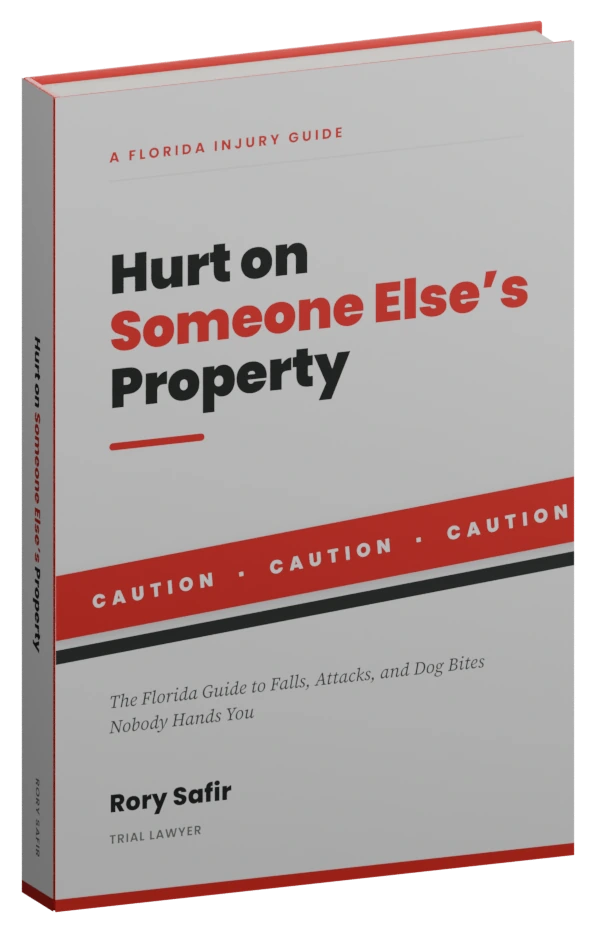
The book
Hurt on Someone Else’s Property
The evidence race, the notice fight, the owner’s records, and why many of these cases end up filed as lawsuits, in one plain-English book on the days and weeks after a fall. Free to Tampa Bay residents, with the digital edition to read the moment you ask.
Common Questions
Do I have a case if my attacker was never caught?
Possibly. The claim is against the property owner, not the attacker, and it turns on the owner’s failure to guard against foreseeable crime. An arrest is not required.
How is foreseeability proven?
Police calls-for-service to the address, the property’s own incident reports, and crime in the surrounding blocks establish what the owner knew or should have known.
The property says it had security. Does that end it?
No. The question is whether the security was reasonable against the known risk and whether it was actually working. A camera that did not record and a guard post that sat empty are failures wearing the costume of security.
Related reading: negligent security, foreseeability and prior crime, and about Rory Safir.