
Store floors in Pinellas Park carry a lot of carts, pallets and wet shoes, and the law treats a fall on a spill differently from a fall over a display somebody left in the aisle. I represent people hurt in Pinellas Park stores and other businesses, and the first thing I sort out is which kind of fall you had, because that decides what you have to prove.
What a Florida slip-and-fall claim requires
A spill and a stacked display aren’t the same claim
If you slipped on a transitory foreign substance in a business, meaning something like spilled juice, a leaking freezer case or rainwater tracked through the entrance, Florida’s section 768.0755 governs. You must prove the business had actual or constructive knowledge of the dangerous condition and should have taken action to remedy it. Actual knowledge means an employee knew. Constructive knowledge can be shown with circumstantial evidence that the condition existed long enough that ordinary care would have caught it, or that it happened regularly enough to be foreseeable.
A fall over a pallet left in the aisle, a torn floor mat, a box sticking out from a low shelf or a cracked curb in the parking lot is a different kind of case. Subsection (2) of the same statute says it doesn’t affect any common-law duty of care owed by whoever possesses or controls the business premises. Those claims rest on that general duty: did the business keep the place reasonably safe, and did it warn you about dangers it knew about or should have found? Whether a wet floor sign was out matters in both kinds of case, so note whether you saw one and where it stood. Our retail and grocery store page walks through both kinds, and the Florida premises liability overview has the rest.
Either way, the evidence sits with the store. I ask for the surveillance video with its timestamps, the floor walk and sweep logs, the stocking schedule, the maintenance records, the incident report and any history of falls in the same area. A store keeps what its policies tell it to keep, and footage can be recorded over, so I send a written request early asking the store to preserve it. At the scene, notice what the floor looked like. Cart tracks or footprints through a spill, dirt in it or a dried edge can suggest time, and a stocking cart parked nearby can suggest who was working the aisle.
Hurt, and then what
A fall onto a concrete store floor can break a hip, a wrist or an ankle, injure your neck or back, or cause a concussion when your head strikes the floor or a shelf. Some of these injuries need surgery and months of therapy, and some don’t show their full weight for weeks. Get medical care right away and keep going to your appointments. Those records tie the injury to the fall, and an insurer reads any gap in care as a reason to pay less. Tell your doctor exactly how you fell and everything that hurts, even the parts that seem minor, so the chart reflects it.
Keep every bill and receipt, a list of missed work, and notes on what you can’t do since the fall, like lifting a grandchild, standing through a shift or sleeping through the night. Those details are the damages in your claim, and pain written down as it happens carries more weight than pain remembered months later.
Before you leave the store, report the fall and ask for a written incident report. Photograph the floor or the display, the lighting and any warning sign, and get the names of witnesses and employees. If deputies came, the Pinellas County Sheriff’s Office takes public records requests. Keep the shoes and clothes you were wearing. Wait on any recorded statement, and on any settlement offer, until you understand how badly you were hurt. Don’t post about the fall or your injuries online, and if the store’s insurance adjuster calls, you can send them to me.
Comparative fault, the deadline and the courthouse
A store or its insurer may argue that you should have seen the hazard. Florida’s comparative fault rule in section 768.81 cuts your recovery by whatever share of fault is assigned to you, and if you’re found more than 50 percent at fault for your own injury, you recover nothing. The lawsuit deadline for negligence is generally two years under section 95.11(5)(a).
Pinellas Park is in Pinellas County, part of the Sixth Judicial Circuit. A lawsuit is filed in the Pinellas County civil court, and the circuit holds court at the Pinellas County Courthouse in Clearwater and the St. Petersburg Judicial Building. Plenty of fall claims settle with the insurer before suit, and I get each file ready for trial anyway. If a case does go to suit, the store has to produce documents in discovery and its employees and managers answer questions under oath in depositions, which is another route to the logs and the video. My fee is contingent, so you owe no fee unless there’s a recovery. I represent injured people, not stores or their insurers, and I handle each case personally. Here’s more about my background.
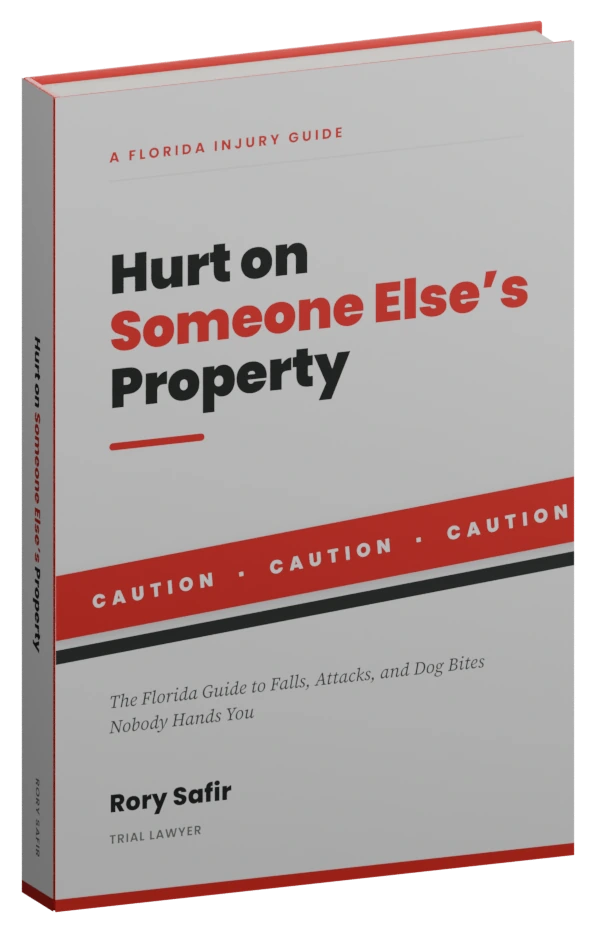
The book
Hurt on Someone Else’s Property
The evidence race, the notice fight, the owner’s records, and why many of these cases end up filed as lawsuits, in one plain-English book on the days and weeks after a fall. Free to Tampa Bay residents, with the digital edition to read the moment you ask.
Common Questions
Do I have a case if I fell in a Pinellas Park business?
Possibly. Under Florida law you generally have to prove the business had actual or constructive knowledge of the hazard and failed to fix it, which turns on evidence like surveillance footage, inspection logs, and prior incidents. A review of the specific facts is the way to know.
What do I have to prove in a Florida slip-and-fall?
For a fall on a spill or similar substance in a business, Florida Statute 768.0755 requires you to prove the business knew or should have known about the hazard and should have remedied it. Constructive knowledge is shown by how long the condition existed or that it happened with regularity.
How long do I have to file after a Pinellas Park fall?
For most fall injury claims the deadline is now two years from the date of the fall, shortened from four by a 2023 change in the law. Because the evidence in these cases disappears quickly, an early review is especially important.
Where would my Pinellas Park slip-and-fall case be heard?
Pinellas County is in Florida’s Sixth Judicial Circuit, so a lawsuit would generally be filed in the Pinellas County civil court. Most claims resolve through insurance before a lawsuit is needed, but preparing the case as if it will be tried is what protects its value.
What will a Pinellas Park slip-and-fall case cost me?
These cases are handled on contingency, so you pay no attorney’s fees unless there is a recovery, and case costs are advanced rather than paid up front. The first strategy session is free.