Sarasota County draws newcomers, retirees, and a heavy seasonal wave of tourists and snowbirds, and its roads feel the pressure, especially from November through the winter. The county averages around six to seven thousand crashes a year, with roughly sixty-five deaths, concentrated where its major highways and busy intersections meet. When another driver’s carelessness causes a crash here, Florida law gives the injured person a way to recover, and this page explains how, across the county and its cities.
Sarasota County crash corridors
The roads where Sarasota crashes happen
US-41, the Tamiami Trail, runs the length of the county and is part of a highway ranked the second deadliest road in America, with narrow lanes, heavy tourist traffic, and a string of dangerous intersections at Bee Ridge Road, Siesta Drive, and Bayshore Drive. Interstate 75 sees congestion crashes that worsen with the county’s rapid growth, with the University Parkway interchange a notable hot spot. US-301 at 17th Street carries downtown pedestrian and heavy-flow crashes, and Fruitville Road is another repeat trouble spot. The county’s US-41 roundabouts, including the busy one at Gulfstream Avenue, confuse unfamiliar drivers and rack up high crash counts. In Venice, the Jacaranda Boulevard roundabout at East Venice Avenue is a recurring site. Knowing where crashes cluster is part of how a Sarasota case is investigated.
How a Florida car accident claim works
Florida is a no-fault state, which shapes every crash claim. After a collision, your own Personal Injury Protection coverage pays first, covering a portion of your medical bills and lost wages regardless of who caused the crash, and Florida law requires you to seek treatment within fourteen days to keep that coverage. In a serious case, that is only the beginning. When an injury is serious and permanent enough to cross Florida’s injury threshold, you can step outside no-fault and pursue the at-fault driver and their insurer for the full extent of your harm, including the pain and the losses no-fault does not cover. Florida also applies comparative fault, so insurers routinely try to shift part of the blame onto the injured person. The mechanics are covered in depth on our Florida car accident overview and its guide to the serious-injury threshold.
The book
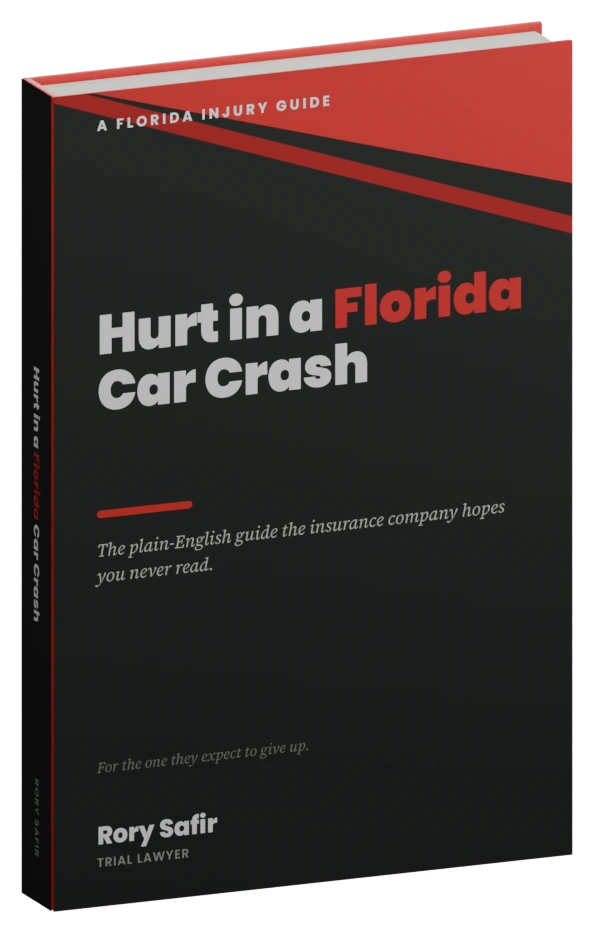
Hurt in a Florida Car Crash
The insurance company’s playbook, the 14-day PIP rule, the serious injury threshold, and Florida’s two-year deadline, in one plain-English book on the hours, days, and weeks after a crash. Free to Tampa Bay crash victims, with the digital edition to read the moment you ask.
Where your Sarasota case is heard, and getting care
Sarasota County sits in Florida’s Twelfth Judicial Circuit, so a crash lawsuit is generally filed in the Sarasota County civil court. Most claims resolve through insurance long before a lawsuit is necessary, but the cases that settle for full value are prepared from the start as if they will be tried. Prompt medical care matters just as much in the early days. The most serious injuries in the county are often treated at Sarasota Memorial Hospital, the region’s trauma center, and getting seen quickly both protects your health and builds the record that ties your injuries to the crash. Remember Florida’s fourteen-day window to seek treatment and keep your PIP coverage.
Car accident help across Sarasota
I represent injured people throughout Sarasota County. For local guidance, see the pages for Sarasota, Venice, and North Port, along with Osprey, Nokomis, Siesta Key, and the surrounding communities. Wherever in the county your crash happened, the approach is the same: build the case on the evidence, answer the insurer’s attempts to shift blame, and prepare it for trial so it settles for what it is worth.
The crashes and injuries these cases involve
Sarasota’s crashes reflect a mix of local and unfamiliar drivers. Rear-end and left-turn collisions dominate the busy stretches of US-41, and the county’s many roundabouts produce a steady stream of confusion crashes. The high-speed wrecks on I-75 and the head-on and left-turn crashes on the Tamiami Trail tend to cause the most serious injuries, and motorcycle and pedestrian crashes are a recurring and often fatal problem on US-41. Some cases involve commercial trucks, rideshare vehicles, or the seasonal surge of tourist traffic, each carrying its own rules about insurance and responsibility. Sorting out exactly how a crash happened, and everyone responsible, is the first work of the case.
What a car accident case can recover
When a crash causes real injury, a Florida claim can seek the full range of losses: the cost of past and future medical care, the income lost while you could not work, the earning capacity lost when an injury changes what you can do for a living, and compensation for the pain, the disability, and the disruption the crash caused. In a case where a crash took a life, the surviving family can bring a wrongful death claim for their own losses. What a case is worth turns on the severity and permanence of the injury and the strength of the proof, never on a number promised at the first phone call, and building the case to show the full extent of the harm is what protects its value.
Comparative fault and what to do after a crash
Because Florida applies comparative fault, the insurer will almost always try to pin some of the blame on you, since every percentage of fault it shifts onto the injured person lowers what it has to pay. That argument is often the heart of the fight, and it is why the evidence, the crash reconstruction, the vehicle data, the scene, and the medical records, matters so much. A few steps in the days after a crash protect both your health and your claim: get medical care promptly and follow through with it, document the scene and the other driver’s information if you can, report the crash, and keep every record. Be careful about giving a recorded statement or accepting a quick settlement before you know the full extent of your injuries, because early offers are built to close a claim cheaply before its real cost is clear.
A car accident case is won on the documents and the proof, the crash reconstruction, the vehicle and scene evidence, the medical records, and the cross-examination of the insurer’s experts and hired doctors, and that is the kind of detail-driven work I have built my career on. I represent injured people, not insurance companies, and I came up in the courtroom as a public defender, trying cases and cross-examining witnesses constantly, so I am ready to take a Sarasota County case to a jury when that is what fair value requires. I handle each case personally, and I know the roads, the courts, and the communities I serve. Learn more about my background.
Common Questions
What areas do you cover in Sarasota County?
I represent people injured in crashes across Sarasota County, including Sarasota, Venice, North Port, Osprey, Nokomis, Siesta Key, and the surrounding communities.
What are the most dangerous roads in Sarasota?
US-41, the Tamiami Trail, is part of a highway ranked the second deadliest road in America, and Interstate 75, US-301 at 17th Street, and the county’s US-41 roundabouts all see a heavy share of serious crashes.
How long do I have to file after a Sarasota crash?
For most crash injury claims the deadline is now two years from the crash, shortened from four by a 2023 change in the law. Because the clock is short and evidence fades, an early review protects your options.
Where would my Sarasota case be heard?
Sarasota is in Florida’s Twelfth Judicial Circuit, so a lawsuit would generally be filed in the Sarasota County civil court. Most claims resolve through insurance before a lawsuit is needed.
What will a Sarasota car accident case cost me?
These cases are handled on contingency, so you pay no attorney’s fees unless there is a recovery, and case costs are advanced rather than paid up front. The first strategy session is free.