In Brief
Since July 1, 2026, a volunteer with a concealed weapon license can provide armed security at a Florida place of worship without the state security licenses that used to be required. Senate Bill 52 created the exemption. It did not erase the duty of care, and that is the question this post walks through for congregations on both sides of the decision.
Since July 1, 2026, a volunteer with a concealed weapon license can provide armed security at a Florida church, synagogue, mosque, or other place of worship without holding the state security licenses that used to be mandatory. Senate Bill 52 added an exemption to chapter 493, the private security licensing law, for unpaid volunteers guarding property their religious institution owns or leases for worship or education. Before the change, anyone doing security work needed a Class D license, and anyone doing it armed needed a Class G firearm license on top of it, with the training each one requires.
A real need, and a real question
The need is genuine. Houses of worship have faced horrific attacks, many congregations cannot afford professional security, and volunteers who step up to protect their communities deserve respect. Nothing in this post questions that. The question the new law raises is a quieter one that shows up later, in my line of work: what happens when volunteer security goes wrong, and a congregant or a visitor gets hurt?
The licensing exemption does not erase the duty of care
Here is what the new law did not change. A property owner in Florida, religious or not, still owes its invitees reasonable care, and an organization that fields a security team, paid or volunteer, is still responsible for selecting, training, and supervising that team reasonably. The Class D and Class G licenses came with mandated training in things like use of force and firearm proficiency. A volunteer exempted from licensing is exempt from that floor, but the institution is not exempt from answering for what its team does. If an untrained volunteer escalates a confrontation, fires a weapon in a crowded space, or tackles the wrong person, the injured person’s case will turn on the choices the institution made: who it selected, what training it required, what written policies it had, and what it knew about the risks. Those are the same questions at the heart of every negligent security case, and I walk through how responsibility gets sorted out in who is responsible when you are hurt on someone else’s property.
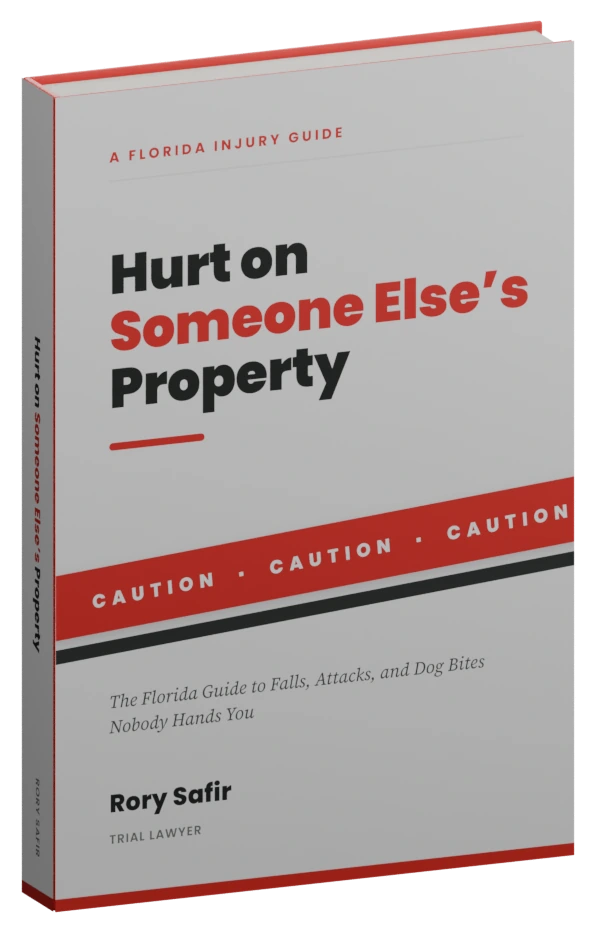
The book
Hurt on Someone Else’s Property
My plain-English book on Florida premises cases has a full chapter on negligent security: what property owners owe you, the records that prove what they knew, and the evidence race that starts the day you are hurt. Free to Tampa Bay residents, with the digital edition to read the moment you ask.
For congregations, the practical advice is simple: use the exemption if it fits your community, but treat training, written policies, and insurance review as if the licenses were still required, because the duty of care still is. For anyone hurt in a security incident on any property, the owner’s records, policies, and training files are where the answers live, and they need to be preserved early. Every case is different and no outcome is promised. You are better Safir than sorry.
Further Reading
- SB 52 (2026), the place of worship security exemption, with its history and text, Florida Senate
- Chapter 493, Florida Statutes, private security licensing, chapter index, Online Sunshine
WRITTEN AND REVIEWED BY
Rory Safir, ACS-CHAL Forensic Lawyer-Scientist
He is the author of The Florida DUI Trial Manual, an NHTSA-qualified instructor in the standardized field sobriety exercises, faculty of the National College for DUI Defense, and a former Assistant Public Defender in the Thirteenth Judicial Circuit.
This post is general information about Florida law as of this writing. It is not legal advice about any specific case.