
In Brief
On February 19, Rory joined Court TV to break down the forensic turning point in the Nancy Guthrie case: glove DNA that came back with no CODIS match, and the investigative genealogy that followed. This post covers what a CODIS non-match really means, why genealogy generates leads and never verdicts, and why DNA tells you who but never when.
On This Page
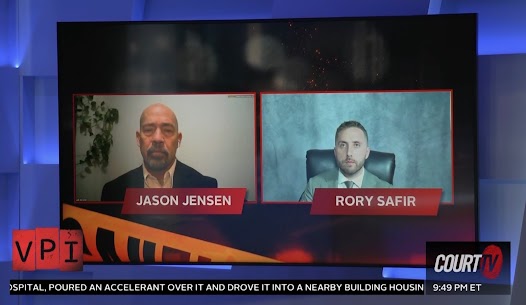
On February 19, I joined Court TV to break down the forensic turning point in the Nancy Guthrie case: DNA recovered from gloves found near the scene was run through CODIS and came back with no match, and investigators turned to investigative genetic genealogy for leads. My segment focused on a different question, whether the pacemaker timestamp could hold the key to the timeline.
What a CODIS non-match really means
A CODIS non-match does not mean investigators hit a dead end. It means the profile is not already in the national criminal database, which is common when the person who left the DNA has no qualifying arrest or conviction. The evidence still exists. The question becomes who it belongs to.
Genetic genealogy generates leads, not verdicts
Investigative genetic genealogy is an investigative tool, not courtroom proof. It can point investigators toward a family tree, but any lead it produces still has to be backed up by traditional evidence and a confirmed one-to-one DNA comparison. And from the defense side, how the DNA was collected, handled, and tested matters as much as whose DNA it is, because a break in the chain of custody can decide whether the evidence is admissible at all.
DNA tells you who, not when
DNA can show who may have touched an item. It cannot explain when or under what circumstances that contact happened. That is why timelines and corroborating evidence carry so much weight, and why a device like a pacemaker, which records data on its own clock, can end up being one of the most important witnesses in the room.
This is the same analysis I bring to my own cases: the science first, then what the science can and cannot prove. That approach is covered in depth across the firm’s forensic science pages.

About the author
Rory Safir is a Florida injury and criminal defense lawyer, a former Assistant Public Defender, and one of a handful of ACS-CHAL Forensic Lawyer-Scientists in the state. He challenges the government’s evidence from the breath test to the crime lab.
Keep reading
WRITTEN AND REVIEWED BY
Rory Safir, ACS-CHAL Forensic Lawyer-Scientist
He is the author of The Florida DUI Trial Manual, an NHTSA-qualified instructor in the standardized field sobriety exercises, faculty of the National College for DUI Defense, and a former Assistant Public Defender in the Thirteenth Judicial Circuit.
This post is general information about Florida law as of this writing. It is not legal advice about any specific case.