
In Brief
It is the first question everyone asks after a crash, and the answer is that nobody can hand you a number on day one. Anyone who promises one is guessing. This post covers what actually sets the value: the medical proof, the available coverage, Florida’s injury threshold and fault rules, and the categories of damages.
On This Page
It is the first question almost everyone asks after a crash, and the answer is that no one can hand you a number on day one. Anyone who promises a figure before the medical picture is clear is guessing. What a good lawyer can do is tell you what really drives the value, so you understand where your case sits and why. In Florida, a handful of specific things move the number more than anything else.
If you were hurt in a St. Petersburg or Pinellas County crash, start with my St. Petersburg car accident lawyer page. For other kinds of injuries, see my St. Petersburg personal injury lawyer page.
Your medical proof is the spine of the case
The value of an injury case rests first on the nature and permanence of the injury and the treatment it required. A documented injury with clear medical records, consistent care, and a lasting effect on your life carries real weight. Gaps in treatment, or a thin record, give the insurer room to argue the harm was minor. This is why getting care promptly and following through matters, both for your recovery and for the case.
The available coverage sets the ceiling
A case is only worth what can really be collected, so the insurance in play often sets the practical ceiling. That means the at fault driver’s liability limits, your own uninsured or underinsured motorist coverage, your personal injury protection, and any other policy that could apply. A serious injury caused by a driver with a small policy and no other coverage is worth less in practice than the same injury with layers of insurance behind it, which is why mapping every policy early is part of valuing a case fairly.
Florida’s injury threshold and your fault share
Two Florida rules shape the number directly. Because Florida is a no fault state, recovering for pain and suffering in a car case generally requires showing a permanent injury that crosses the statutory threshold, so the permanence of the injury shapes the case legally as well as medically. And under Florida’s modified comparative negligence rule, your recovery is reduced by your percentage of fault, and if you are found more than fifty percent at fault, you recover nothing. That is why the fight over fault has real dollars attached to it.
The categories of damages
Put together, a Florida injury claim can include economic damages, the medical bills and lost wages and future care you can document, and noneconomic damages, the pain, the limitation, and the loss of the life you had before. Serious cases can also involve future losses that a professional has to project. A number that reflects all of that, rather than just the bills to date, is what full value means.
Valuing a case fairly means looking at the medicine, the coverage, the fault picture, and the threshold together, not reaching for a formula. I build a case to prove the full extent of the harm and to reach every policy that can pay for it, and I represent injured people, not insurers. If you were hurt in a crash anywhere across the Gulf Coast and want a straight assessment of where your case stands, here is how a Florida injury claim works.
Hurt in Florida? Let’s talk about your case.
The insurance company is already working to pay you less. A free strategy session is the fastest way to understand what your claim is really worth.
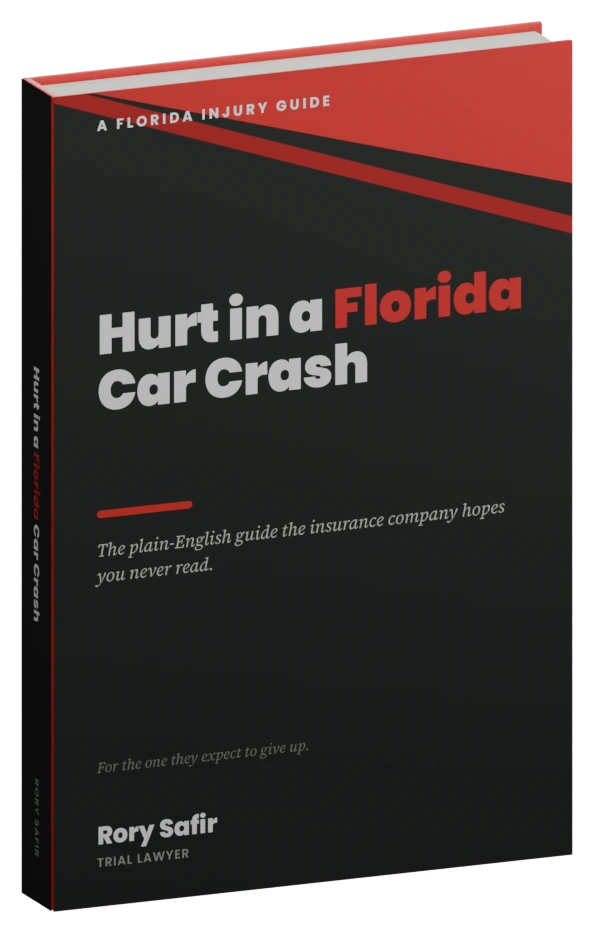
The book
Hurt in a Florida Car Crash
The insurance company’s playbook, the 14-day PIP rule, and Florida’s two-year deadline, in one plain-English book on the hours, days, and weeks after a crash. Free to Tampa Bay crash victims, with the digital edition to read the moment you ask.

About the author
Rory Safir is a Florida injury and criminal defense lawyer and one of a handful of ACS-CHAL Forensic Lawyer-Scientists in the state. He builds injury cases the way he builds a defense, from the evidence up: the crash reconstruction, the records, and the cross-examination of the insurer’s experts.
Keep reading
WRITTEN AND REVIEWED BY
Rory Safir, ACS-CHAL Forensic Lawyer-Scientist
He is the author of The Florida DUI Trial Manual, an NHTSA-qualified instructor in the standardized field sobriety exercises, faculty of the National College for DUI Defense, and a former Assistant Public Defender in the Thirteenth Judicial Circuit.
This post is general information about Florida law as of this writing. It is not legal advice about any specific case.