In Brief
The first settlement offer lands while the bills pile up, and the pull to take it is real. A first offer is rarely a fair one, and the release that comes with it is permanent. This post covers why the offer arrives so fast, what the release actually does, and what to do before you decide.
On This Page
A settlement offer lands a few weeks after the crash, the bills are piling up, and the check would make the pressure stop. The pull to just take it is real. But a first offer is rarely a fair one, and once you sign the release that comes with it, the case is over for good, even if your injuries turn out to be worse than anyone knew.
If you were hurt in a St. Petersburg or Pinellas County crash, start with my St. Petersburg car accident lawyer page. For other kinds of injuries, see my St. Petersburg personal injury lawyer page.
Why the first offer comes so fast
Insurers make early offers for a reason. Early is when you know the least about your own injuries, when the financial pressure is highest, and when you are least likely to have a lawyer. Settling then, before the full medical picture is clear, almost always favors the insurer, because it locks in a number based on incomplete information. A low first offer is a starting position, not a final valuation.
The release is permanent
A settlement comes with a release, and signing it ends your claim forever. If you later need surgery, develop complications, or discover the injury is permanent, you cannot go back for more. You traded the whole case, including its future, for that one check. That is why the timing matters so much, since some injuries do not reveal their true severity for weeks or months.
What to do before you decide
Do not sign anything, and do not cash a settlement check, until you understand the full scope of your injuries and what your case is really worth. Let your treatment reach a point where the doctors can speak to whether the injury is lasting. Get the offer reviewed before you respond, because an offer that looks generous against today’s bills can look very different against the future care a serious injury requires.
A fast check trades your entire case, future and all, for a number set before anyone knows the real extent of the harm, which is exactly why the first offer deserves a hard look rather than a signature. I value cases on the full picture and negotiate from there, and I represent injured people, not insurers. If an insurer has already put an offer in front of you after a crash anywhere across the Gulf Coast, here is how a Florida injury claim works.
Hurt in Florida? Let’s talk about your case.
The insurance company is already working to pay you less. A free strategy session is the fastest way to understand what your claim is really worth.
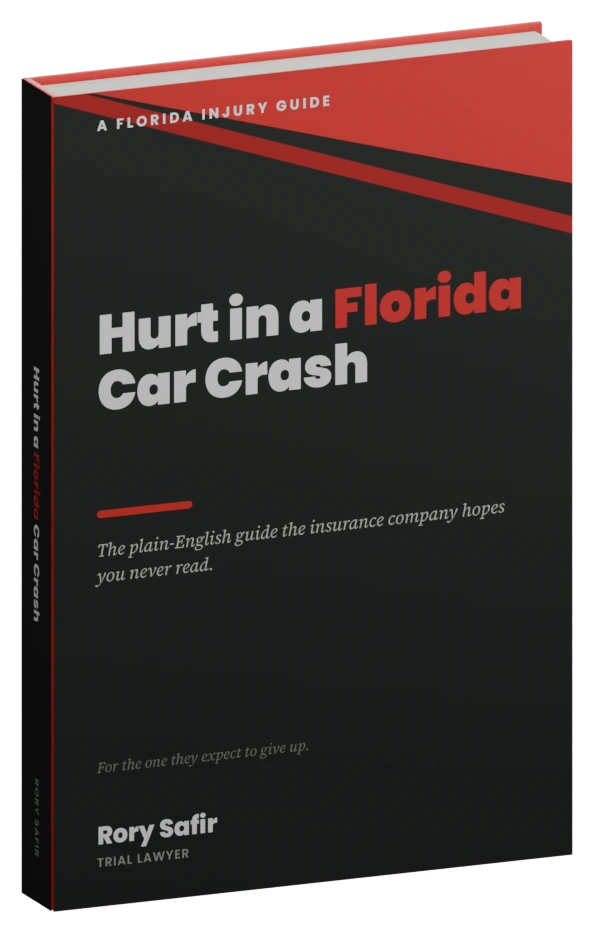
The book
Hurt in a Florida Car Crash
The insurance company’s playbook, the 14-day PIP rule, and Florida’s two-year deadline, in one plain-English book on the hours, days, and weeks after a crash. Free to Tampa Bay crash victims, with the digital edition to read the moment you ask.

About the author
Rory Safir is a Florida injury and criminal defense lawyer and one of a handful of ACS-CHAL Forensic Lawyer-Scientists in the state. He builds injury cases the way he builds a defense, from the evidence up: the crash reconstruction, the records, and the cross-examination of the insurer’s experts.
Keep reading
WRITTEN AND REVIEWED BY
Rory Safir, ACS-CHAL Forensic Lawyer-Scientist
He is the author of The Florida DUI Trial Manual, an NHTSA-qualified instructor in the standardized field sobriety exercises, faculty of the National College for DUI Defense, and a former Assistant Public Defender in the Thirteenth Judicial Circuit.
This post is general information about Florida law as of this writing. It is not legal advice about any specific case.