In Brief
After a Florida crash, the first coverage that pays your medical bills is usually your own, even when the other driver was plainly at fault. That is how no fault works. This guide walks the order of payment: PIP first, what pays when it runs out, the liens that quietly shrink a recovery, and how to keep bills away from collections while the claim runs.
On This Page
It surprises many people to learn that after a Florida crash, the first coverage to pay your medical bills is usually your own, even when the other driver was clearly at fault. Florida’s no fault system is built that way, and understanding the order of who pays helps you avoid both surprise bills and costly mistakes.
Your PIP pays first
Because Florida is a no fault state, your own personal injury protection is the first payer for your medical bills after a crash, regardless of who caused it. PIP typically covers a portion of your reasonable medical expenses and lost wages up to the policy’s limit. This is also why the fourteen day rule matters, since you generally must seek initial care within fourteen days of the crash to keep your PIP benefits. PIP is an early layer, not the whole answer, because serious injuries quickly exceed its limit.
What pays after PIP runs out
When your injuries exceed PIP, the next sources come into play. Your health insurance may cover treatment, often subject to a right to be repaid from any settlement, which is called a lien. The at fault driver’s bodily injury liability coverage can pay for the harm they caused, and your own uninsured or underinsured motorist coverage can step in when that driver had too little insurance or none. Some medical providers will also treat under a letter of protection, agreeing to wait for payment out of the eventual recovery.
Liens, and why they matter to your net recovery
Health insurers, PIP, and providers who treated on a lien often have a right to be repaid from your settlement. If those repayment claims are not reviewed and negotiated, they can eat into your recovery. Sorting out and reducing those liens is a real part of the work, and it is often the difference between a settlement number and the amount that lands in your pocket.
Do not let bills go to collections in the meantime
While the claim is pending, keep every bill and explanation of benefits, and make sure PIP and health coverage are billed properly so accounts do not slide into collections. Managing that flow is part of protecting both your credit and your case.
Between PIP, health coverage, the at fault driver’s insurance, your own UM coverage, and the liens that attach to all of it, the question of who pays is more layered than it looks, and handling it well is what protects your net recovery. I manage the coverage and negotiate the liens so more of the settlement stays yours, and I represent injured people, not insurers. If you are facing medical bills after a crash anywhere across the Gulf Coast, here is how I handle Florida car accident claims.
If you were hurt in a St. Petersburg or Pinellas County crash, start with my St. Petersburg car accident lawyer page. For other kinds of injuries, see my St. Petersburg personal injury lawyer page.
Hurt in Florida? Let’s talk about your case.
The insurance company is already working to pay you less. A free strategy session is the fastest way to understand what your claim is really worth.
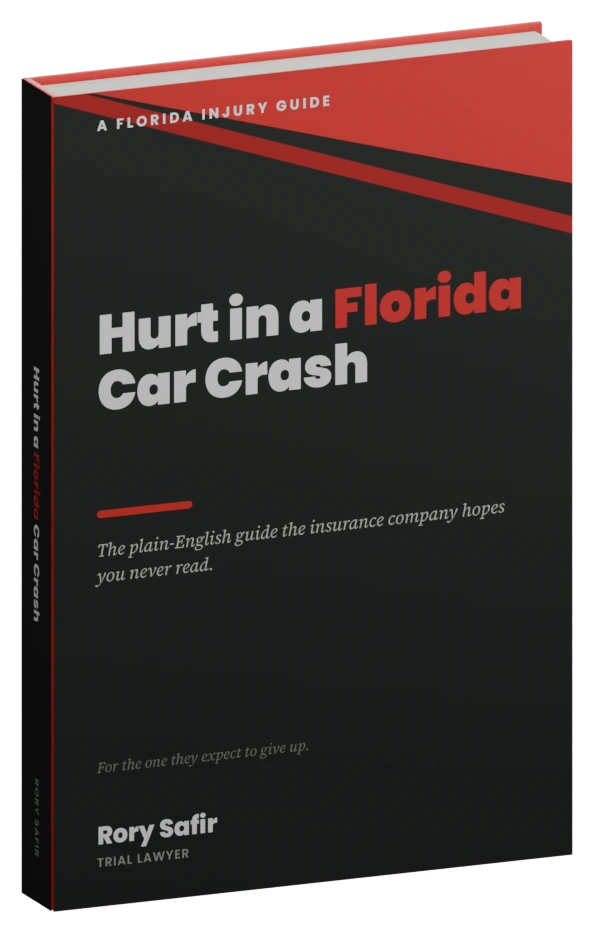
The book
Hurt in a Florida Car Crash
The insurance company’s playbook, the 14-day PIP rule, and Florida’s two-year deadline, in one plain-English book on the hours, days, and weeks after a crash. Free to Tampa Bay crash victims, with the digital edition to read the moment you ask.

About the author
Rory Safir is a Florida injury and criminal defense lawyer and one of a handful of ACS-CHAL Forensic Lawyer-Scientists in the state. He builds injury cases the way he builds a defense, from the evidence up: the crash reconstruction, the records, and the cross-examination of the insurer’s experts.
Keep reading
Further Reading
- Fla. Stat. 627.736, Required personal injury protection benefits, full text, Online Sunshine
- Fla. Stat. 627.737, the tort exemption and the injury threshold, full text, Online Sunshine
WRITTEN AND REVIEWED BY
Rory Safir, ACS-CHAL Forensic Lawyer-Scientist
He is the author of The Florida DUI Trial Manual, an NHTSA-qualified instructor in the standardized field sobriety exercises, faculty of the National College for DUI Defense, and a former Assistant Public Defender in the Thirteenth Judicial Circuit.
This post is general information about Florida law as of this writing. It is not legal advice about any specific case.