RIDR, Reducing Impaired Driving Recidivism, is the diversion program for the Thirteenth Judicial Circuit in Hillsborough. An eligible first-time DUI without a crash, a minor in the car, or a reading of 0.20 or higher can be reduced to reckless driving with alcohol as a significant factor, with a withhold of adjudication. The program sorts cases into three levels, and the conditions scale with the level.
| Item | Detail |
|---|---|
| Circuit and counties | Thirteenth Judicial Circuit: Hillsborough |
| Resulting charge | Reckless driving with alcohol as a significant factor, under section 316.192(5), with a withhold of adjudication |
| Eligibility | Misdemeanor DUI, no minor in the vehicle, no crash, and a reading below 0.20, with no disqualifying prior or pending record and no CDL |
| Level 1 | BAC at or below 0.15 |
| Level 2 | BAC above 0.15, or no breath sample |
| Level 3 | Drug-related DUIs |
| Pre-plea, all levels | Remain crime-free, complete DUI school and begin treatment, attend the MADD Victim Impact Panel, and complete 10 community service hours |
| Plea outcome | Reckless driving with alcohol as a significant factor, withhold, 12 months probation, standard court costs, a 10-day vehicle immobilization, and no alcohol or drugs during probation |
| By level at sentencing | Level 1 adds 50 hours and 3 months of monitoring; Level 2 adds 75 hours and 6 months of monitoring; Level 3 adds 50 hours and a 3-month PharmCheck patch |
Levels 1 and 2 install an ignition interlock or a continuous alcohol monitor before the plea. Admission is at the sole discretion of the State Attorney for the Thirteenth Circuit, and the office credits sanctions already completed at sentencing. Terms from the office’s RIDR information sheet. Program terms last verified June 2026.
Three levels, one outcome
All three RIDR levels end the same way, in reckless driving with a withhold and twelve months of probation. What changes by level is the conditions. Level 1, a reading at or below 0.15, carries the lightest add-ons. Level 2, a higher reading or no breath sample, adds more community service and a longer monitoring period. Level 3, a drug case, swaps the alcohol monitor for a PharmCheck patch. Levels 1 and 2 require the interlock or monitor to be installed before the plea, so the work starts early.
The withhold is the point
Because RIDR ends in a withhold of adjudication on a reckless-driving charge, the outcome avoids the mandatory DUI revocation and can often be sealed later. The State Attorney credits sanctions already completed at sentencing, so finishing the pre-plea work efficiently can shorten what remains. As with every diversion program, admission is at the prosecutor’s sole discretion.
I started out as an Assistant Public Defender in Florida’s Thirteenth Judicial Circuit, in Tampa, and today I am one of six ACS-CHAL Forensic Lawyer-Scientists in Florida. I have stood on both sides of a DUI docket, so I can give you a straight read on where your case sits on the penalty scale, whether a reduction or a diversion program is realistic, and what it takes to get there. Learn more about my background.
RIDR questions
What is the RIDR program?
RIDR, Reducing Impaired Driving Recidivism, is the diversion program run by the State Attorney for the Thirteenth Judicial Circuit in Hillsborough. An eligible first-time offender who completes the pre-plea sanctions is offered reckless driving with a withhold of adjudication and twelve months of probation. The program assigns a level based on the reading and whether drugs are involved.
Who is eligible for RIDR?
RIDR requires a misdemeanor DUI with no minor in the vehicle, no crash, and a breath or blood reading below 0.20. It excludes drivers with disqualifying prior or pending records and commercial license holders. Eligibility is decided at the State Attorney's sole discretion, and meeting the criteria does not guarantee a place.
What are the RIDR levels?
Level 1 is a reading at or below 0.15, Level 2 is a reading above 0.15 or a case with no breath sample, and Level 3 is a drug-related DUI. Levels 1 and 2 require an ignition interlock or continuous alcohol monitor before the plea, and Level 3 requires a PharmCheck patch.
What does RIDR require at sentencing?
All levels end in reckless driving with a withhold, twelve months of probation, court costs, a 10-day vehicle immobilization, DUI school, and treatment. Level 1 adds 50 community service hours and three months of monitoring, Level 2 adds 75 hours and six months, and Level 3 adds 50 hours and a three-month PharmCheck patch.
Can a RIDR outcome be sealed?
Because RIDR ends in reckless driving with a withhold of adjudication, the outcome can often be sealed later if you otherwise qualify. A DUI conviction can never be sealed in Florida, which is one of the main reasons the reduction is valuable.
Related: the diversion overview, the DROP program, the DETER program, and a first DUI.
Free guide No. 21
The RIDR Program
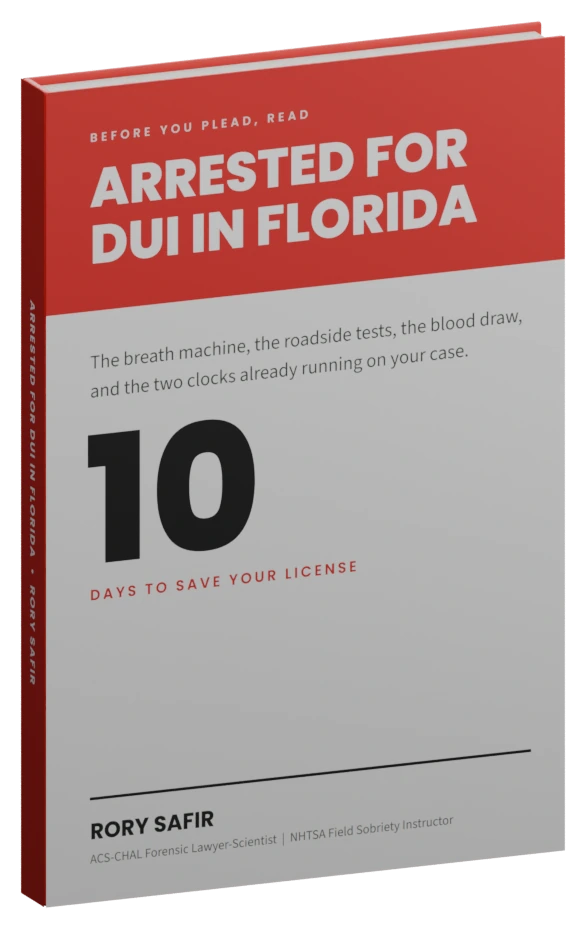
All three RIDR levels end in reckless driving with a withhold, but the work it takes to get there scales with your reading. This guide explains the levels, the pre-plea sanctions, and when fighting the case beats taking the deal. One request unlocks the whole Safir Guides library.
See if you qualify
RIDR is not open to everyone charged with a DUI in the Thirteenth Circuit, Hillsborough. On the program terms as written, any one of these will normally rule you out:
- a felony charge rather than a misdemeanor DUI
- a minor in the vehicle
- a crash
- a reading of 0.20 or above
- a disqualifying prior or pending record
- a commercial driver license
Clearing that list is not the same as being accepted. Admission rests with the State Attorney for the Thirteenth Circuit, and some of these turn on facts that are arguable rather than fixed, including what your reading actually was once uncertainty is accounted for. If none of the above obviously applies to you, it is worth a conversation before the application deadline passes.
From the blog: how RIDR works in Hillsborough, and the level that catches people out.
This page is general information about Florida law, not legal advice, and it does not create an attorney-client relationship. Florida DUI penalties are set by section 316.193, Florida Statutes, and related statutes including sections 322.28, 322.271, and 316.656. Diversion and charge-reduction programs are run at the sole discretion of each State Attorney and can change at any time. Every case turns on its own facts, and past results do not guarantee a similar outcome.