On a second DUI, one question controls almost everything: how long ago was the first one. A second DUI within five years of a prior conviction brings mandatory jail, a longer impoundment, and a five-year license revocation. The same charge more than five years out looks much closer to a first offense. Florida measures that window from the date of the prior offense, so the calendar matters as much as the facts of the new arrest.
| Penalty | What the law provides |
|---|---|
| Fine | $1,000 to $2,000, or $2,000 to $4,000 if the level was 0.15 or higher or a minor was present |
| Jail | Up to 9 months, or up to 12 months with the 0.15 or minor enhancement |
| Mandatory minimum jail | 10 days if the second is within 5 years of a prior, at least 48 hours served consecutively |
| License revocation | Minimum 5 years if within 5 years of a prior, with hardship eligibility after 1 year; otherwise 180 days to 1 year |
| Vehicle impoundment | 30 days if within 5 years of a prior, not concurrent with jail |
| Ignition interlock | 1 to 2 years |
| DUI school | Level II, 21 hours, plus evaluation and treatment |
The five-year window runs from the date of the prior offense. Figures from section 316.193 and sections 322.28 and 322.271, Florida Statutes. Program terms last verified June 2026.
The five-year line
The five-year window is the hinge of a second-DUI case. Inside it, the law requires a minimum of ten days in jail with at least forty-eight hours served back to back, a thirty-day vehicle impoundment, and a five-year license revocation with hardship eligibility only after the first year. Outside it, none of those mandatory pieces apply, and the exposure drops toward first-offense territory. Because the window runs from the prior offense date, the first thing I check is whether your new arrest falls inside or outside it, sometimes by only weeks.
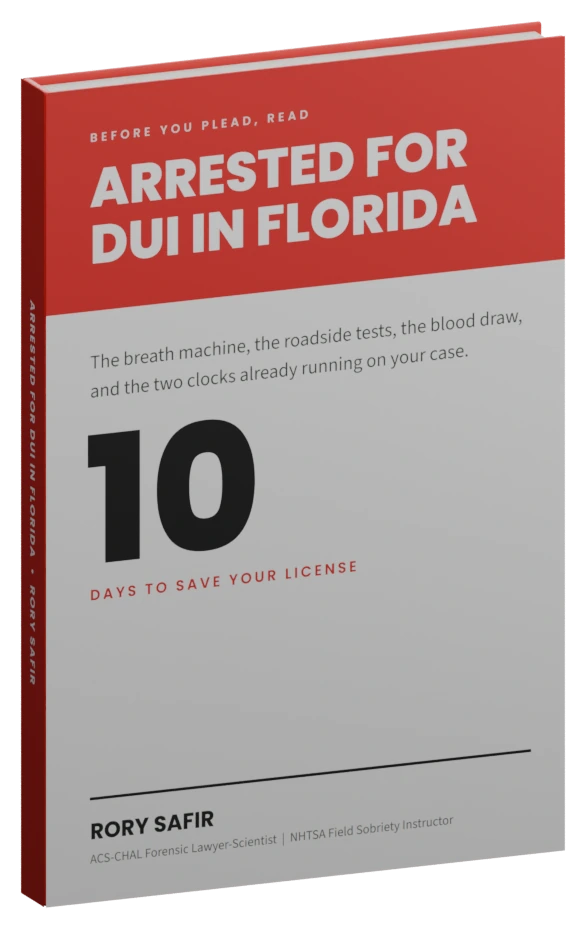
Free guide No. 18
Your Second DUI
A second DUI is a different case: mandatory jail inside the five-year window, a longer revocation, and fewer exits. This booklet explains what changes and where the fight is. One request unlocks the whole Safir Guides library.
Why the defense shifts to the evidence
The county diversion programs are built for first offenders, so a second DUI usually will not qualify. That does not mean a conviction is a foregone conclusion. The focus moves to the proof: whether the stop was lawful, whether the breath or blood testing holds up, and whether the evidence can be suppressed. Those challenges live in the breath test, blood test, and search and seizure sections.
Hardship license and the interlock
If a second DUI falls within five years of a prior, the five-year revocation does not have to mean five years with no driving at all. You can apply to the DHSMV for a hardship license after one year of the revocation, and the conditions are strict: you must complete DUI school, stay in the DUI supervision program for the rest of the revocation, and show that you have not driven or used alcohol or drugs in the year before applying. A one-to-two-year ignition interlock device is required, two years if the reading was above 0.15. A second DUI more than five years out carries the shorter first-offense revocation and its hardship path. These rules come from section 322.271, Florida Statutes. The application steps are covered in the hardship license guide.
I started out as an Assistant Public Defender in Florida’s Thirteenth Judicial Circuit, in Tampa, and today I am one of six ACS-CHAL Forensic Lawyer-Scientists in Florida. I have stood on both sides of a DUI docket, so I can give you a straight read on where your case sits on the penalty scale, whether a reduction or a diversion program is realistic, and what it takes to get there. Learn more about my background.
Second DUI questions
What is the penalty for a second DUI in Florida?
A second DUI carries a fine of $1,000 to $2,000, up to nine months in jail, a one-to-two-year ignition interlock, and a 30-day vehicle impoundment. If the second offense is within five years of a prior, there is a mandatory minimum of 10 days in jail and a five-year license revocation. The fine and jail rise with a 0.15 reading or a minor in the vehicle.
Is there mandatory jail for a second DUI?
Only when the second DUI is within five years of a prior conviction. In that case the law requires a minimum of 10 days in jail, with at least 48 hours served consecutively. A second DUI more than five years after the first has no mandatory jail, though jail up to nine months remains possible.
Why does the five-year window matter so much?
Because it controls the harshest parts of the sentence. A second DUI within five years brings mandatory jail, a 30-day impoundment, and a five-year license revocation. The same charge a day past five years has none of those mandatory pieces. The window runs from the date of the prior offense, so the exact dates can change everything.
Can a second DUI be reduced?
Reduction is harder than on a first offense because the diversion programs are built for first offenders, but it is not automatic that a second DUI ends in a conviction. Suppressing the stop, the testing, or the evidence can still change the outcome, which is why the defense often focuses on the proof rather than the program.
How long is the license revocation for a second DUI?
If the second DUI is within five years of a prior, the revocation is a minimum of five years, with hardship-license eligibility after one year. If it is more than five years out, the revocation is the same 180-day-to-one-year range as a first offense.
Related: the full penalty chart, a first DUI, a third DUI, a 0.15 or higher reading, and challenging the breath test.
From the blog: facing DUI number two? start with the dates on your first one.
This page is general information about Florida law, not legal advice, and it does not create an attorney-client relationship. Florida DUI penalties are set by section 316.193, Florida Statutes, and related statutes including sections 322.28, 322.271, and 316.656. Diversion and charge-reduction programs are run at the sole discretion of each State Attorney and can change at any time. Every case turns on its own facts, and past results do not guarantee a similar outcome.