Winning a dog bite case on liability is only half the work. The other half is making sure there is a policy to pay it, because in most cases the compensation does not come from the dog owner’s pocket. It comes from insurance, and insurers have several ways to limit or deny what they owe.
Where the money comes from
The usual source is the dog owner’s homeowner’s or renter’s liability coverage, which generally pays for bites whether they happen at home or elsewhere. A landlord’s policy or a business’s policy can apply when one of them is also responsible. Finding and reading every applicable policy at the outset is what sets the realistic value of the claim, and it often turns up coverage the injured person did not know existed.
Dog bite claims almost always get paid from a homeowner’s or renter’s policy, and finding every layer of that coverage is where the real money is won or lost. I represent the injured person, not the insurer that would rather pay less. I am a trial lawyer who built my skills as a public defender in the courtroom, trying numerous cases and cross-examining witnesses again and again, so I read the policy language closely and refuse the first lowball. I handle your case personally, identify the owner and each available policy, and document what the bite has cost you. When an insurer will not be fair, I am prepared to put the case in front of a jury. Learn more about my background.
Where the recovery usually comes from
Winning a dog-bite case on liability is only half the job, because a judgment is only worth what can be collected, and that means finding the insurance. In most cases the money comes from the dog owner’s homeowners or renters policy, which typically includes liability coverage that responds to injuries the household’s dog causes. Depending on the facts, other policies can come into play too: a landlord’s policy if a negligence claim reaches the landlord, or a business’s commercial coverage if a boarding facility, daycare, sitter, or walker had custody of the dog. Because the registered owner may have thin coverage or none, identifying every policy that could respond is central to a real recovery, and it is worth doing early, before an adjuster steers the conversation toward the smallest available limit. The strength of Florida’s strict-liability rule does a victim little good if no one takes the time to find the coverage that pays the claim.
Breed exclusions and other coverage traps
Insurers write dog risk out of their policies in several ways. Many exclude specific breeds outright. Some exclude any dog with a prior bite or a dangerous-dog classification, and some cap dog-related claims well below the policy’s other limits. None of that necessarily ends the claim, but it changes the strategy: it makes identifying every responsible party and every other policy, including a landlord’s, that much more important.
The exclusions insurers use to say no
Homeowners policies are also full of traps that insurers use to deny a dog-bite claim, and knowing them is part of the work. Many policies exclude specific breeds the insurer considers high-risk, so a claim can be met with a denial based on the dog’s breed alone. Others exclude a dog with a prior bite history or one that has been classified as dangerous, and some exclude animal liability altogether, especially on lower-cost or specialty policies. Florida does not have a statewide breed-specific liability statute, but local ordinances can add their own rules, which sometimes cut in a victim’s favor. When an exclusion is raised, it is worth examining closely rather than accepting, because whether it truly applies depends on the policy’s exact wording and the facts, and insurers sometimes assert an exclusion that does not fit. And when the owner really is uninsured or excluded, the case can turn to the owner’s personal assets or to other responsible parties and their coverage, which is one more reason to map every possible source at the start.
What a dog bite claim can recover
The damages run from the immediate medical care, including emergency treatment and the infection risk that makes bites so dangerous, through reconstructive and revision surgery, future medical needs, lost income, and pain and suffering. Scarring and disfigurement are compensable in their own right and are frequently the largest part of a serious bite case. Where a child is involved, those long-term harms loom even larger, which I cover on children and dog bites.
The book
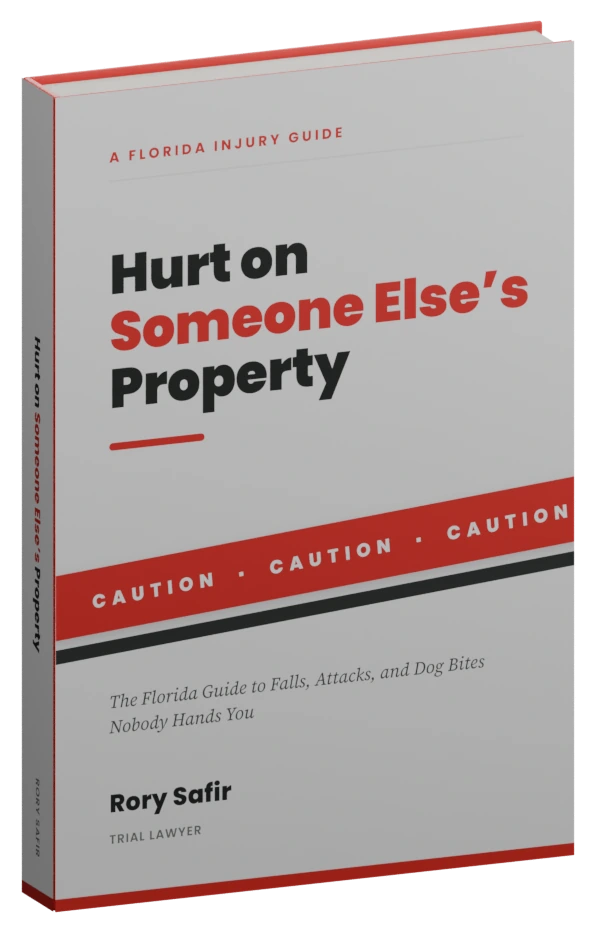
Hurt on Someone Else’s Property
The evidence race, the owner’s records, negligent security, and a full chapter on Florida dog bites, the strictest rule in the state, in one plain-English book on the days and weeks after you are hurt. Free to Tampa Bay residents hurt on someone else’s property, with the digital edition to read the moment you ask.
The deadline
For a bite on or after March 24, 2023, the deadline to sue is generally two years under Fla. Stat. 95.11. Do not wait on it. The dog, the owner’s insurance policy, the animal-control report, and the vaccination and quarantine records are all easier to lock down in the first weeks than the first year.
A strong liability case still needs a source that will pay, and finding it is where I put real effort. I map every policy that could respond, the owner’s, a landlord’s, or a boarding business’s, and I test the breed and other exclusions insurers raise rather than taking a denial at face value. I represent injured people, not owners or their insurers, and I make sure a winning claim under Florida’s strict-liability law turns into compensation you can collect.
Common Questions
Who really pays a dog bite claim in Florida?
Most of the time it is the dog owner's homeowner's or renter's liability insurance, which typically covers dog bites that happen on or off the property. A landlord's or a business's policy can apply in some cases. If there is no coverage, the claim may have to reach the owner's personal assets.
Can an insurer refuse to cover a dog bite?
Yes. Many policies exclude certain breeds, and some exclude any dog with a prior bite or a dangerous-dog classification. Others cap dog-related claims at a lower limit. The policy language controls, which is why reading it, and finding any other available coverage, is one of the first things to do.
What if the dog owner has no insurance?
The claim does not necessarily end. An uninsured owner can still be personally liable, and there may be other responsible parties, such as a landlord or a keeper, with their own coverage. Identifying every potential source of recovery early is what keeps an uninsured owner from being the end of the road.
What can I recover in a dog bite claim?
Medical bills for the emergency care, infection treatment, and any reconstructive surgery, plus future medical costs, lost wages, and pain and suffering. Scarring and disfigurement, which are common in bite cases, are compensable in their own right, and they are often the largest component.
Should I give the insurance company a statement?
Be careful. A recorded statement early on is where casual words about what you were doing before the bite get turned into a provocation or comparative-fault argument later. It is worth talking to a lawyer before you give the insurer anything beyond the basic facts.
Can more than one insurance policy cover a single dog bite?
Yes. Beyond the owner’s homeowners or renters coverage, a boarding facility, daycare, sitter, or walker that had custody of the dog may carry its own commercial coverage, and a landlord’s policy can respond if a negligence claim reaches the landlord. Mapping every policy that could apply is part of finding the full value of a claim rather than settling for the first limit an adjuster offers.
Related: Dog bites overview, Dog bite defenses, Children and dog bites, Landlord and property liability, and About Rory Safir.
This page is general information about Florida dog bite law, not legal advice, and it does not create an attorney-client relationship. The governing authority for the underlying claim is Fla. Stat. 767.04 (strict liability for dog bites); coverage is governed by the terms of the applicable insurance policy, and 95.11 sets the limitations period. Every case is different, and past results do not guarantee a similar outcome. The hiring of a lawyer is an important decision that should not be based solely on advertisements.