

If someone you love has been hurt or neglected in a Hillsborough County nursing home, the hardest part is usually that they cannot tell you what happened. The chart is written by the same people whose care is in question, and the family’s own eyes, visits, and dated notes become the only independent record. I represent Hillsborough County families in nursing home abuse, neglect, and wrongful death cases, and I wrote a plain-English book for exactly the moment a family starts to suspect something is wrong.
A county full of large facilities, and the strain behind the doors
Hillsborough County concentrates some of the largest skilled nursing operations in the region, from the chain facilities along the interstate corridors of Tampa to the campuses serving the retirement communities in the county’s south, including the Sun City Center area, one of the biggest concentrations of older residents in Florida. Large buildings run by out-of-town chains have a pattern this practice sees again and again: a care plan that promises supervision and turning and feeding, and a staffing sheet that never had the hands to deliver it. Florida sets a staffing floor for nursing homes, a weekly average of direct-care hours per resident with minimum shares from certified nursing assistants and licensed nurses, and the floor is a minimum, not a promise of good care. When the injury traces back to the numbers on that sheet, the case is rarely about one careless aide. It is about the budget set above the bedside.
The records race starts the day you suspect
Florida gives residents and their legal representatives the right to the chart, and it gives a facility a set number of working days to produce it. Request it in writing early, because the version of the chart that exists the week of the injury and the version that exists months later are sometimes different documents. Photographs, a dated notebook, and the hospital’s own records from any transfer are the pieces the facility cannot edit. A lawyer adds the piece families can never get on their own: a preservation letter that freezes video, staffing and assignment sheets, and internal reports before they cycle away.
Where a Hillsborough County case is heard, and the clock that runs
Hillsborough County sits in Florida’s Thirteenth Judicial Circuit, and a lawsuit is generally filed at the George E. Edgecomb Courthouse in downtown Tampa. Before any filing, Florida requires a presuit notice and an investigation window with its own technical rules, and the limitations period is generally two years from when the neglect was discovered or should have been discovered. Subtract the presuit road from that clock and the honest advice is simple: have the case evaluated as soon as you suspect, even if you are still deciding what to do. My years in the Thirteenth Circuit’s courts were spent inside the records these cases are built from, and I worked on the defense side of these cases before I chose to stand with families.
The firm serves all of Hillsborough County, with dedicated city pages for Tampa, Brandon, and Riverview.
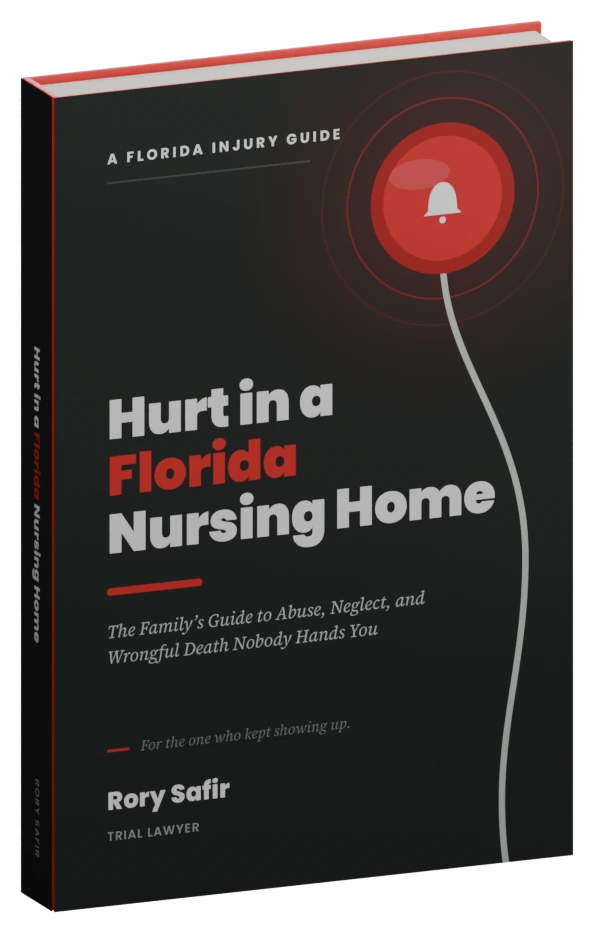
The book
Hurt in a Florida Nursing Home
The warning signs, the records race, the staffing spreadsheet at the root of almost everything, the arbitration trap, and the two-year clock that is shorter than it sounds, in one plain-English book written for the family that suspects something is wrong. Free to Florida families, with the digital edition to read the moment you ask.
Common Questions
Do I have a case if my parent cannot say what happened?
Very possibly yes. These cases are proven with the facility’s own paper: the chart against the hospital records, the staffing sheets against the care plan, and the inspection history. The resident’s silence does not defeat the claim, because the records speak.
What is the deadline for a Hillsborough County nursing home case?
Generally two years from when the neglect was discovered or reasonably should have been, with an outer limit set by law, and a required presuit investigation that consumes months of it. The clock question should be the first question a lawyer answers for you.
The admission papers include an arbitration agreement. Is the case over?
No. Signed is not always enforceable. Courts look at who signed, what authority they had, and whether the terms strip away rights the residents’ rights law guarantees. It is a document question, and the answer lives in the admission file.
Related reading: nursing home abuse, the warning signs, Florida’s staffing requirements, and about Rory Safir.