
Bradenton’s assisted living facilities range from small residential homes to large memory-care campuses. Families choose them for the promise in the name: assistance, with living. When the reality is an understaffed building that kept your person past the point it could care for them, Florida law gives the family a path, and I represent Bradenton families on it.
The pattern: marketing ahead of staffing
Memory care sells hard, and it fails hard too, because a secure unit is only as real as the people watching it. The cases are wandering and elopement, falls in residents the assessments already flagged, medication failures, and the quiet decline of a resident whose needs outgrew the license while the invoices kept arriving. The proof lives in the facility’s own paper: the assessments, the service plans, the door and staffing logs, and the state complaint history.
First steps
If the danger is immediate, call 911 and let the hospital document independently. Report to the abuse hotline and the ombudsman, request the records in writing, photograph what you see, and start a dated notebook. Then have a lawyer send the preservation letter, because video loops and staffing sheets do not wait.
The rulebook, and the courthouse
An assisted living case turns on the facility’s narrower license and duties, and a Bradenton case is litigated in the Twelfth Judicial Circuit at the Manatee County Judicial Center in downtown Bradenton, generally on a two-year discovery clock.
See also the Manatee County assisted living abuse page.
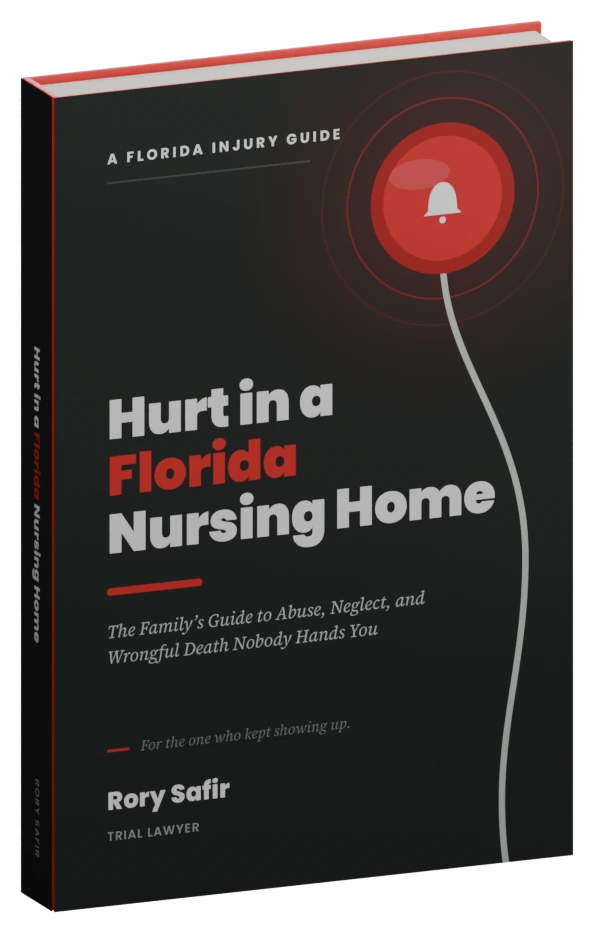
The book
Hurt in a Florida Nursing Home
The warning signs, the records race, the staffing spreadsheet at the root of almost everything, the arbitration trap, and the two-year clock that is shorter than it sounds, in one plain-English book written for the family that suspects something is wrong. Free to Florida families, with the digital edition to read the moment you ask.
Common Questions
How do I find an ALF’s violation history?
The state licensing agency inspects assisted living facilities and its inspection and complaint records are public. Repeat citations for supervision or staffing make it hard for a facility to claim the harm came from nowhere.
The facility says my mother signed an arbitration agreement.
Have the document reviewed. Enforceability turns on who signed, what authority they held, and whether the terms strip statutory rights. Signed is the start of the question, not the end.
What can a family recover?
Medical costs, the human losses the law recognizes, and in a death case the remedies Florida provides for survivors. No honest lawyer promises numbers, and every case is different.
Related reading: assisted living facility abuse, the warning signs, and about Rory Safir.