In Brief
The first conversation about a DUI case decides what gets investigated. Six things make that hour count: what you need to protect, a written timeline of the 24 hours before the stop with the gaps marked, the paperwork you were handed, the recordings and people who can back up your account, your medical picture including medications by name, dose, and time, and what was said on both sides. Bring what you have, mark what you’re unsure of, and don’t delete or post anything.
Every DUI file I open starts with two accounts of the same night. One is the report, written by the officer after the arrest. The other is yours, and it’s usually the one with more detail and less structure. The first hour we spend together is where I decide what records to go get, what video to pull, and what questions to put to the State’s witnesses. What you bring into that hour shapes all of it.
Most lists of what to bring to a DUI lawyer stop at the citation and the bond papers. Those matter, and they’re on this list. The things that change how a case gets investigated are further down.
Start with what you need to protect
Before the facts, the stakes. Do you drive for work, or hold a commercial license? Does your job require a clean record, or a professional license that reports arrests? Is there a custody arrangement, a security clearance, or an immigration status in the picture? Are you a student? I ask this first because a case can be worked toward more than one ending, and the ending worth working toward depends on what an ordinary outcome would cost you. A driver who can’t lose a license for ninety days and a driver who can are two different cases with identical facts.
Write down the 24 hours before the stop
Do this before the meeting, and do it in writing, while the details are still yours. Start the day before. When you slept and how much. What you ate and when. Every drink, with the time and the size, as close as you can get. Every medication, prescription or over the counter, by name, dose, and the time you took it. Any injury, illness, or pain that day. Where you were going and why. What you were wearing on your feet.
Then mark the gaps. If you’re not sure whether the last drink was at 10:30 or 11:15, write both and note that you’re not sure. An honest timeline with three question marks in it is worth more to me than a confident one, because I’ll be checking it against receipts, phone records, and video, and a timeline that was filled in from memory to look complete is the one that gets a witness in trouble.
The medication line deserves its own sentence. “I take something for anxiety” tells me almost nothing. The name, the dose, and the hour tell me whether it belongs in the case at all, and if it does, what records I need to prove it. A medication isn’t a defense by itself, and I won’t pretend otherwise. It’s a question I can only investigate if I have the details.
Bring every piece of paper you were handed
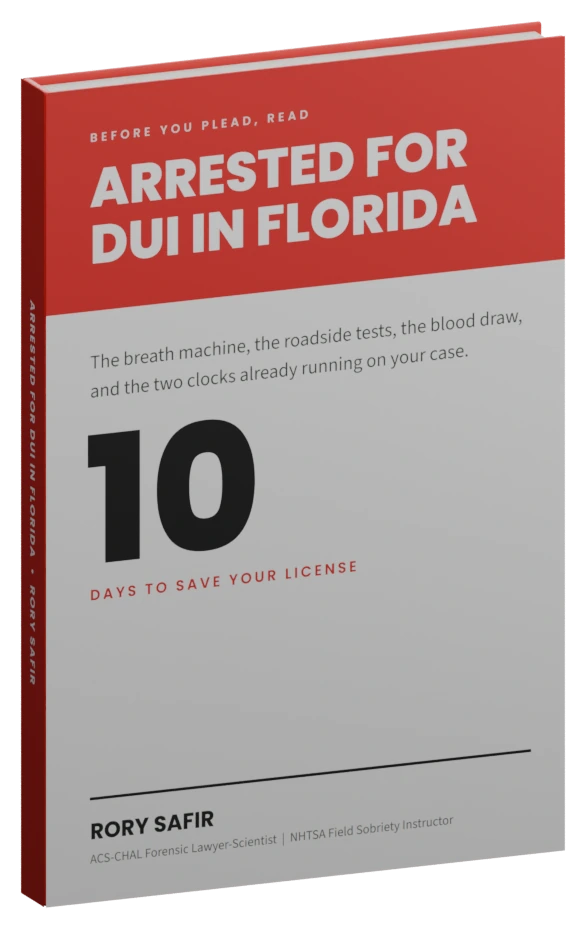
The citation, which carries the charge and the court date. Any notice of suspension, which starts a clock: in Florida you generally have ten days from the arrest to request a formal review hearing on the license, and that request is one of the first things I file. The bond or release papers. The tow or impound receipt. If you took a breath test, the affidavit with the numbers on it. If you refused, anything you were given about that. Photographs of the paperwork are fine to send ahead, and originals come to the meeting. The formal review hearing page explains what that first filing does.
Recordings and people who can back you up
Was anyone in the car? Who saw you in the hour before you drove: a bartender, a friend, a spouse, a coworker? Do you have a receipt from the restaurant, a rideshare record from earlier in the night, a phone with location history, a doorbell camera at home that shows when you left? Did the stop happen in front of a business with a camera? Write down names and where the recordings live. Don’t delete anything, and don’t post about the arrest anywhere. A text you wish you hadn’t sent is far less damaging than a text you deleted.
The officer’s body camera is the record I go to first, and I work it in separate passes rather than one viewing: what was said and done and when, then you, then the surface and the lighting and the instructions, then a pass checking each claim in the report against something outside it. Your own recordings and witnesses are what that last pass runs on. How that comparison works is on the video versus the report page.
Your medical picture
Balance problems, inner ear conditions, back or knee injuries, and neurological conditions all affect the roadside exercises. Eye conditions matter for the eye test, which is why a check for equal tracking is supposed to come first, a point I wrote about after a lazy eye turned up in a Florida case. Acid reflux, diabetes, and certain diets come up in breath cases. Anxiety and panic come up in nearly every case, because a traffic stop at night produces them in people who’ve never had them.
I’m not asking you to diagnose yourself from a bodycam, and I won’t either. I’m asking for the list, so that the right records can be requested and, where a case needs it, the right professional can look. The medical conditions page covers how a condition becomes a question the State has to answer rather than a story the jury has to take on faith.
What was said, on both sides
As best you remember it. What the officer asked and what you answered, especially anything about drinking, medication, or where you were coming from. Whether you were asked to do the exercises and what you were told about them. Whether you agreed to anything, and what you understood you were agreeing to. What was said at the station. If you remember a specific phrase, write it down in the officer’s words rather than your summary of them, because the exact sentence is what I’ll be looking for on the video.
Officers have real reasons for the questions they ask, and a report that describes your answers isn’t evidence of bad faith. It’s evidence of what got written down. The point of your account is to give me something to compare it with.
What happens with all of this
I don’t hand out a form and grade it. The firm’s intake covers these areas in the conversation, and the chronology, the paperwork, and the witness list become the map for what gets requested from the agency, the lab, and the court. Some of what you bring will turn out not to matter. Some of it will be the case. The only way to know which is to have it in front of me, marked where you’re unsure, before I decide what to go get. The questions that separate DUI lawyers page is a fair test to run on me in that same hour.
Common questions
What should I bring to a first meeting with a DUI lawyer in Florida?
The citation, any notice of license suspension, the bond or release papers, the tow receipt, and the breath test affidavit if you took a test. Then the things most lists skip: a written timeline of the 24 hours before the stop with your uncertainties marked, medications by name, dose, and time, a list of witnesses and recordings, and your medical history as it relates to balance, eyes, and breathing.
Should I write down what happened before I meet with a lawyer?
Yes, and soon, while the details are yours. Write it as a timeline, mark every point you’re not sure about, and keep it for your lawyer rather than sharing it. An honest timeline with gaps is more useful than a confident one filled in from memory, because it’ll be checked against receipts, phone records, and video.
Does taking a prescription medication help my DUI case?
Not by itself, and nobody should tell you it does. What a medication does is raise a question worth investigating, and that investigation needs the name, the dose, and the time you took it, plus records. Whether it matters in your case depends on the facts and the science, which is why the details come first.
Should I delete texts or posts from the night of the arrest?
No. Deleting material after an arrest can become its own problem, and it takes away evidence that often helps, such as a message showing where you were and when. Don’t post about the arrest either. Preserve everything and bring it to your lawyer.
Related reading: Florida DUI defense, field sobriety exercises in your case, and how to read a breath test affidavit.
WRITTEN AND REVIEWED BY
Rory Safir, ACS-CHAL Forensic Lawyer-Scientist
He is the author of The Florida DUI Trial Manual, an NHTSA-qualified instructor in the standardized field sobriety exercises, faculty of the National College for DUI Defense, and a former Assistant Public Defender in the Thirteenth Judicial Circuit.
This post is general information about Florida law, not legal advice, and it does not create an attorney-client relationship. The ten-day window to request a formal review hearing on an administrative suspension comes from section 322.2615, Florida Statutes, and DUI is governed by section 316.193. Deadlines and procedures change, and every case turns on its own facts. Nothing here is a promise about how any case will end, and past results do not guarantee a similar outcome.