Assisted living facilities market themselves like home, and Hillsborough County has hundreds of them, from converted houses to large memory-care campuses in Brandon, Carrollwood, and Sun City Center. An ALF runs on a different rulebook than a nursing home: thinner staffing rules, a separate residents’ rights list, and a license that limits the care it may take on. The cases this office sees usually begin at that limit: a facility that kept a resident long after her needs outgrew what it was licensed and staffed to handle.
The dangers that cluster in assisted living
The harm in these facilities tends to gather in a few places: a resident with dementia who wanders or elopes from a building that promised secure memory care, medication failures in a facility with no nursing-home-style staffing floor, and falls in residents everyone knew needed more help than the schedule allowed. The common thread is a facility that accepted a person it was not truly equipped to keep safe, and did not adjust, because every month of occupancy is revenue.
Which rulebook, and why it changes the case
Florida licenses assisted living facilities under a different chapter of law than nursing homes, with its own residents’ rights and its own duties around assessments, supervision, and moving residents out when their needs exceed the license. Sorting out which kind of facility you were really dealing with, and what its license obligated it to do, is often the first legal step in a Hillsborough County ALF case, and it is one reason these cases reward a lawyer who works both nursing home and assisted living claims.
What to do now, and where the case is heard
Report immediate danger to 911 and the state’s abuse hotline, start a dated notebook, request the resident’s records in writing, and have a preservation letter sent before video and staffing records cycle away. A Hillsborough County case is litigated in the Thirteenth Judicial Circuit in Tampa, on a clock that generally runs two years from discovery. I worked on the defense side of these cases before I chose to stand with families, and the facility’s playbook is not a guess to me.
The firm serves all of Hillsborough County, with dedicated city pages for Tampa, Brandon, and Riverview.
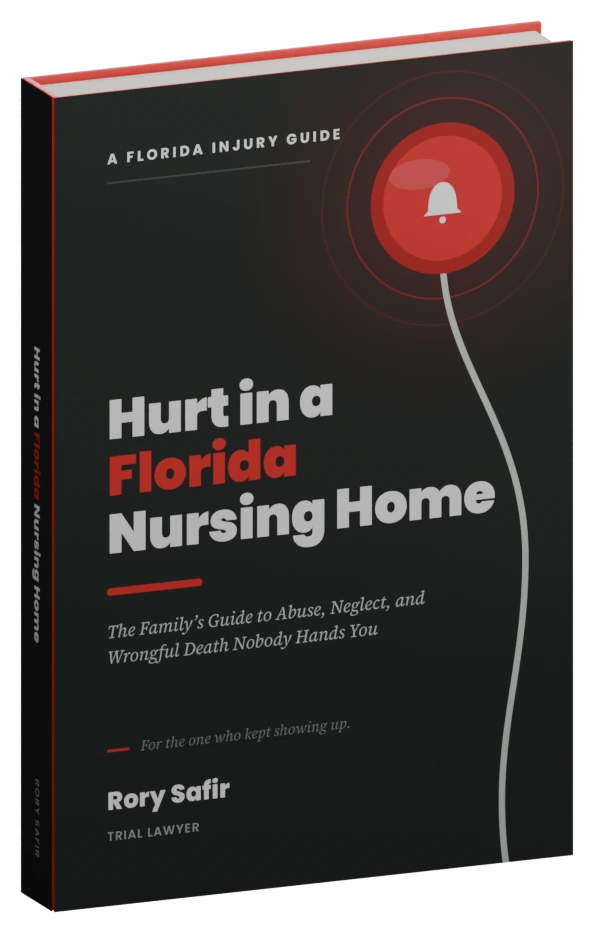
The book
Hurt in a Florida Nursing Home
The warning signs, the records race, the staffing spreadsheet at the root of almost everything, the arbitration trap, and the two-year clock that is shorter than it sounds, in one plain-English book written for the family that suspects something is wrong. Free to Florida families, with the digital edition to read the moment you ask.
Common Questions
Is an assisted living facility held to the same standards as a nursing home?
No, and that difference is the heart of many cases. An ALF has thinner staffing rules and a narrower license, which means the case often turns on whether the facility kept a resident whose needs had outgrown what it was allowed and equipped to provide.
My father wandered away from a memory-care unit. Is that a case?
Elopement from secure memory care is one of the most serious failures an ALF can have, because the entire premise of the unit is supervision and controlled exits. The door logs, staffing records, and elopement risk assessments usually tell the story.
What is the deadline for an ALF neglect case?
Generally two years from when the neglect was discovered or reasonably should have been, with presuit requirements that consume part of it. Early evaluation costs nothing and preserves options.
Related reading: assisted living facility abuse, elopement and wandering, nursing home abuse, and about Rory Safir.