Pinellas County loves its dogs, and most days that is a wonderful thing. It also means people and dogs share public space here constantly, and when a bite happens, the injuries can be serious, especially for children. Florida law puts responsibility on the owner from the very first bite, under a strict-liability rule that does not care whether the dog had ever bitten anyone before. If a dog bit you or your child anywhere in Pinellas County, the real question is usually not whether the owner is responsible. It is how much the injury is worth and who pays it.
Florida's dog bite rule
A dog-loving county, and what that means for these cases
Pinellas is one of the most dog-friendly counties in Florida, with dog beaches, off-leash parks, and dog-friendly patios and districts from St. Petersburg to Dunedin to the beaches. All of that is a good thing, and it also means people and dogs share public and lawful private space constantly, which is exactly where Florida’s dog bite law reaches. A county this full of dogs simply sees more of these encounters, and when a friendly outing turns into a serious bite, the same strict-liability rules apply whether it happened at a park, on a sidewalk, at a friend’s home, or outside a shop. The firm serves all of Pinellas, and cities with a concentration of these cases have their own page, starting with St. Petersburg, Clearwater, Largo, and Pinellas Park.
Florida is not a one-free-bite state
Under Florida’s dog bite statute, the owner of a dog that bites a person in a public place, or lawfully in a private place including the owner’s own property, is liable for the damages regardless of the dog’s former viciousness or the owner’s knowledge of it. That is strict liability, which means you do not have to prove the owner was careless or knew the dog was dangerous, and the familiar line, he has never done that before, changes nothing. A second statute makes an owner liable for non-bite injuries too, like a dog that knocks someone down, though that one requires proof of who the dog’s owner is. The result is that liability is usually settled early, and the real work is proving how serious the harm is.
The defenses an insurer will try, and how they really work
Strict liability is strong, so the owner’s insurer reaches for the statute’s exceptions. The best known is the “Bad Dog” sign defense, and the statute does protect an owner who prominently displayed an easily readable sign with those words, but the defense has two hard limits, it does not apply when the victim is a child under 6, and it does not apply when the owner’s own negligence, such as leaving a gate open, caused the bite. The insurer may also argue that you provoked the dog or were trespassing, and Florida’s comparative-fault rule does reduce recovery by your share while the statute only protects people who were lawfully present. Those arguments are answerable with the facts, and our dog bite defenses page takes each one apart.
Who pays, and why children are a special concern
The money in a dog bite case almost always comes from a homeowner’s or renter’s liability policy, which is why identifying the right policy and reading its terms matters, since some carriers write in breed exclusions or low limits that shape what is available. Where a landlord knew a tenant’s dog was dangerous and could have acted, there may be a second source of recovery. Children deserve special mention, because the Centers for Disease Control reports that young children have the highest rate of emergency-room visits for dog bites, their injuries tend to be to the face and head, and the law strips the sign defense for any victim under 6. Our homeowners insurance and children and dog bites pages go further.
Where your case is heard, and what to do first
Pinellas County is part of Florida’s Sixth Judicial Circuit, and a lawsuit is generally filed in the Pinellas County civil court, whose main courthouse is in Clearwater, though most dog bite claims resolve with the homeowner’s insurer first. In the first days, a few steps protect both your health and the claim. Get medical care right away, because dog bites carry a real infection risk and the record ties the injury to the attack. Identify the dog and the owner, and get the owner’s homeowner’s insurance information and the dog’s vaccination records. Report the bite to Pinellas County Animal Services, which investigates and can classify a dangerous dog. Photograph the injuries and the location, including whether a “Bad Dog” sign was or was not posted. And keep the details straight before you talk to the owner’s insurer.
Because Florida law puts liability on the owner from the first bite, my work in these cases is to prove the full weight of the harm and to answer the tired defenses before they take hold, the sign on the fence, the claim that you provoked the dog, the argument that you should not have been there. I read the record and the documents the way I have my whole career, I represent the people who were bitten and not the owners or their insurers, and I came up as a public defender trying cases, so I am ready to take one to a jury when full value requires it. I handle your case personally throughout. Learn more about my background.
Common Questions
The dog had never bitten anyone before. Does the owner still owe me?
Yes. Florida is not a one-free-bite state. Under the dog bite statute, an owner is liable for a bite in a public place or while you are lawfully on private property regardless of the dog’s past behavior or the owner’s knowledge of it.
There was a “Bad Dog” sign. Am I out of luck?
Not necessarily. A prominently posted, easily readable sign can be a defense, but it has two exceptions. It does not apply if the bitten person is a child under 6, and it does not apply if the owner’s own negligence caused the bite.
Who pays a dog bite claim?
Usually the owner’s homeowner’s or renter’s liability insurance. Some policies contain breed exclusions or low limits, so identifying the right policy and its terms early matters. Where a landlord knew a tenant’s dog was dangerous, there may be an additional source.
What if I was partly at fault?
Florida uses comparative fault, so provoking the dog or ignoring a clear warning can reduce recovery by your share, and past a certain point bar it. Those arguments are answerable with the facts and are a common insurer tactic rather than the end of a claim.
Where would my Pinellas County dog bite case be heard?
Pinellas County is in Florida’s Sixth Judicial Circuit, and a lawsuit is generally filed in the Pinellas County civil court, whose main courthouse is in Clearwater. Most claims resolve with the homeowner’s insurer first, but preparing every case as if it will be tried protects its value.
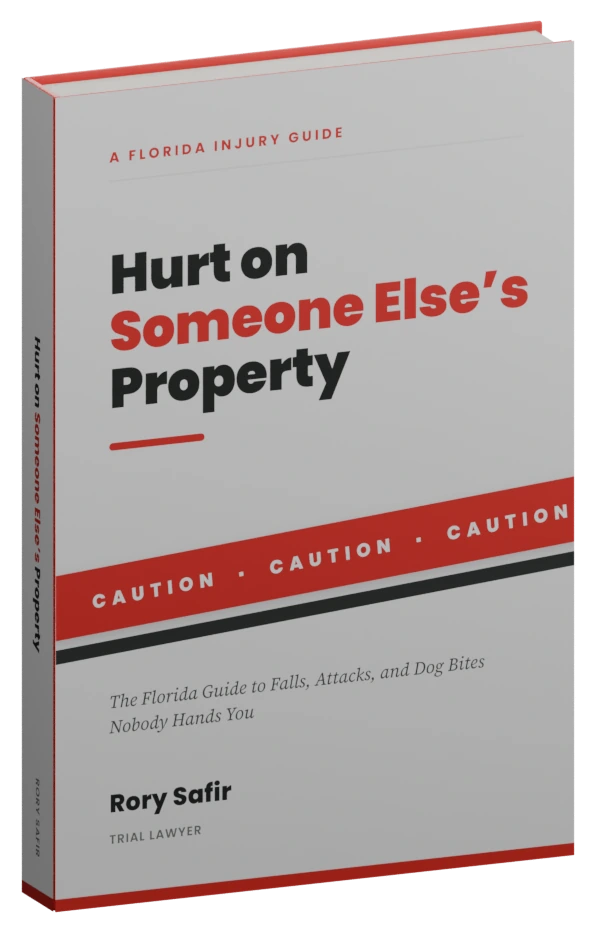
The book
Hurt on Someone Else’s Property
The evidence race, the notice fight, the owner’s records, and the honest truth that many of these cases have to be filed as lawsuits, in one plain-English book on the days and weeks after a fall. Free to Tampa Bay residents, with the digital edition to read the moment you ask.