
In Brief
We don’t publish prices, because the right fee depends on the charge, your record, the evidence, whether the license hearing is part of the work, and the training and experience the case calls for. Here’s how it’s set. Each case gets one engagement fee, quoted after a free strategy session, and you can pay in full or on a payment plan. A trial carries its own fee if the case goes that far. Case costs, like a defense toxicologist or a court reporter, are billed separately, and larger ones need your approval first. If you can’t afford a lawyer, the clerk of court decides whether you qualify for the public defender under section 27.52, Florida Statutes.
The first thing many folks ask me, sometimes before they’ve told me what happened, is what this is going to cost. That’s a fair question, and you should get a clear answer before you sign anything. I don’t put prices on this site because two people charged with the same thing can need very different amounts of work, so any number on a page would be wrong for most of the people reading it. What I can do is explain how the fee gets set, what it covers, and what it doesn’t.
How the fee is set
Every criminal and DUI case here is quoted as one engagement fee for that case, covering the charges listed in the agreement. I quote it after a free strategy session, once I’ve heard what happened and seen the paperwork. The fee doesn’t grow with each phone call or email.
It can change in three situations, and the agreement spells each one out: if the facts turn out to be materially different from what I was told, if the State files more serious charges, or if there’s a new arrest while the case is open. Those change the work, so they change the fee.
What you’re paying for
The fee isn’t only a measure of hours. It also reflects what I bring to a DUI case. I’m one of only six attorneys in Florida designated as a Forensic Lawyer-Scientist by the Chemistry and the Law Division of the American Chemical Society. I hold credentials from the National Highway Traffic Safety Administration as both a practitioner and an instructor in standardized field sobriety testing, the roadside exercises officers use. I’ve trained in chromatography, toxicology, pharmacology, and blood testing, and I wrote The Florida DUI Trial Manual, a reference for the lawyers who try these cases.
That training is what lets me read a breath printout, a blood report, or the bodycam of the roadside exercises and see what’s worth challenging. The fee pays for that knowledge as well as the time it takes to apply it.
What moves the fee up or down
The charge comes first. A first misdemeanor DUI and a felony are different amounts of work, with different hearings and different stakes. Your record matters too, because a prior conviction can change both the charge and what a conviction would cost you.
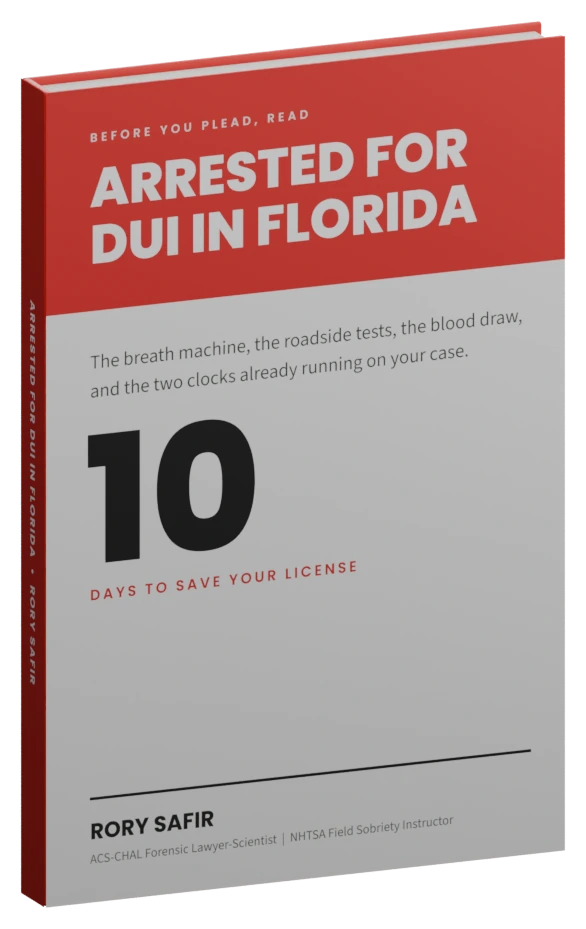
On a DUI, the license hearing is its own question. The formal review hearing with the Department of Highway Safety and Motor Vehicles is separate from the criminal case, and in Florida you generally have ten days from the arrest to request it. When that hearing is part of the representation, the agreement says so, and the hearing’s own costs, such as subpoena and application fees, are folded in. The formal review hearing page explains what it does.
Then there’s the evidence. A breath test, a blood draw, a crash with injuries, or several hours of bodycam video each mean more records to request, more to review, and more to challenge.
What the fee covers
The engagement fee covers the case at the trial level. That means reviewing the discovery, filing and arguing motions, going to hearings, negotiating with the prosecutor, and preparing any defense witnesses the case needs.
If the case doesn’t resolve and goes to trial, there’s a separate trial fee. I tell you about it at the start so it isn’t a surprise later. Many cases never reach trial, but a quote that leaves trial out of the conversation doesn’t tell you what the case could cost.
What isn’t in the fee
Two things sit outside it. The first is case costs: a defense toxicologist or other outside scientist, a private investigator, a court reporter for a deposition, copies of video, and subpoena delivery. Those are paid as they come up, and any larger cost needs your approval before it’s spent.
The second is work after the trial-level case ends, or work on something new. An appeal, a probation violation, or a new charge would each be its own agreement.
Paying for it
You can pay the fee in full or on a payment plan, and you can pay by card. A plan spreads the fee out on a schedule written into the agreement, so you know every amount and date before you sign.
Can I get a public defender instead?
Maybe. Florida decides this by income and assets, not by the charge. Under section 27.52, Florida Statutes, you apply to the clerk of court, and the clerk compares your application with the statute’s test. You qualify if your income is at or below 200 percent of the federal poverty guidelines for your household size, or if you receive cash assistance through TANF, poverty-related veterans’ benefits, or SSI.
Property can count against you. Owning property with $2,500 or more in net equity creates a presumption that you don’t qualify, though your home and one car worth $5,000 or less aren’t counted. The application fee is $50, and nobody found indigent can be refused a lawyer for not paying it. If the clerk says you don’t qualify, you can ask the judge to review that decision at your next hearing.
I started my career as an assistant public defender in Hillsborough County, and the lawyers in those offices know the courthouse and try a lot of cases. The trade-off is choice: you don’t pick your lawyer. Two other limits are worth knowing before you decide. The public defender’s duties under section 27.51 cover criminal cases, and the DHSMV license hearing isn’t on that list. And the court can’t appoint the public defender if you’ve already hired a private lawyer for the same case.
What to ask any lawyer about fees
Whoever you hire, ask these before you sign: what the fee covers, whether a trial costs extra, how case costs are handled and approved, and what happens to the fee if new charges are filed. Clear answers usually mean a clear agreement. The questions that separate DUI lawyers page covers the rest of that first conversation, and the what to bring to a DUI case review post makes the hour count.
Common questions
How much does a DUI lawyer cost in St. Petersburg?
It depends on the charge, your record, the evidence, whether the license hearing is part of the work, and the training and experience the case calls for, so no single number fits every case. At this firm, a DUI is quoted as one engagement fee for the case after a free strategy session, with a separate fee only if the case goes to trial. Case costs are billed separately, and payment plans are available.
Is the first consultation free?
Yes. The first strategy session is free, and the fee is quoted after it, once the facts and the paperwork are in front of me.
Do you offer payment plans for criminal and DUI cases?
Yes. You can pay the fee in full or on a payment plan, and you can pay by card. The schedule is written into the agreement before you sign.
Does the fee include the DUI license hearing?
It can. The formal review hearing with the Florida Department of Highway Safety and Motor Vehicles is separate from the criminal case. When it’s part of the representation, the agreement lists it and covers the hearing’s related costs, such as subpoena and application fees.
Are case costs included in the fee?
No. Costs like a defense toxicologist, a private investigator, a court reporter, video copies, and subpoena delivery are paid separately as they come up, and larger costs need your approval before they’re spent.
Who qualifies for a public defender in Florida?
Under section 27.52, Florida Statutes, the clerk of court decides from your application. You qualify if your income is at or below 200 percent of the federal poverty guidelines for your household size, or if you receive TANF cash assistance, poverty-related veterans’ benefits, or SSI. Property with $2,500 or more in net equity creates a presumption that you don’t, not counting your home and one car worth $5,000 or less. The application fee is $50, and you can ask the judge to review a denial.
Related reading: Florida DUI defense, what a Florida DUI costs you, and the formal review hearing.
WRITTEN AND REVIEWED BY
Rory Safir, ACS-CHAL Forensic Lawyer-Scientist
He is the author of The Florida DUI Trial Manual, an NHTSA-qualified instructor in the standardized field sobriety exercises, faculty of the National College for DUI Defense, and a former Assistant Public Defender in the Thirteenth Judicial Circuit.
This post is general information about Florida law and about how this firm sets its fees. It is not legal advice and it does not create an attorney-client relationship. Every fee is set in a written agreement for the specific case. The authorities discussed are sections 27.51 and 27.52, Florida Statutes (2026), as of October 30, 2026.